


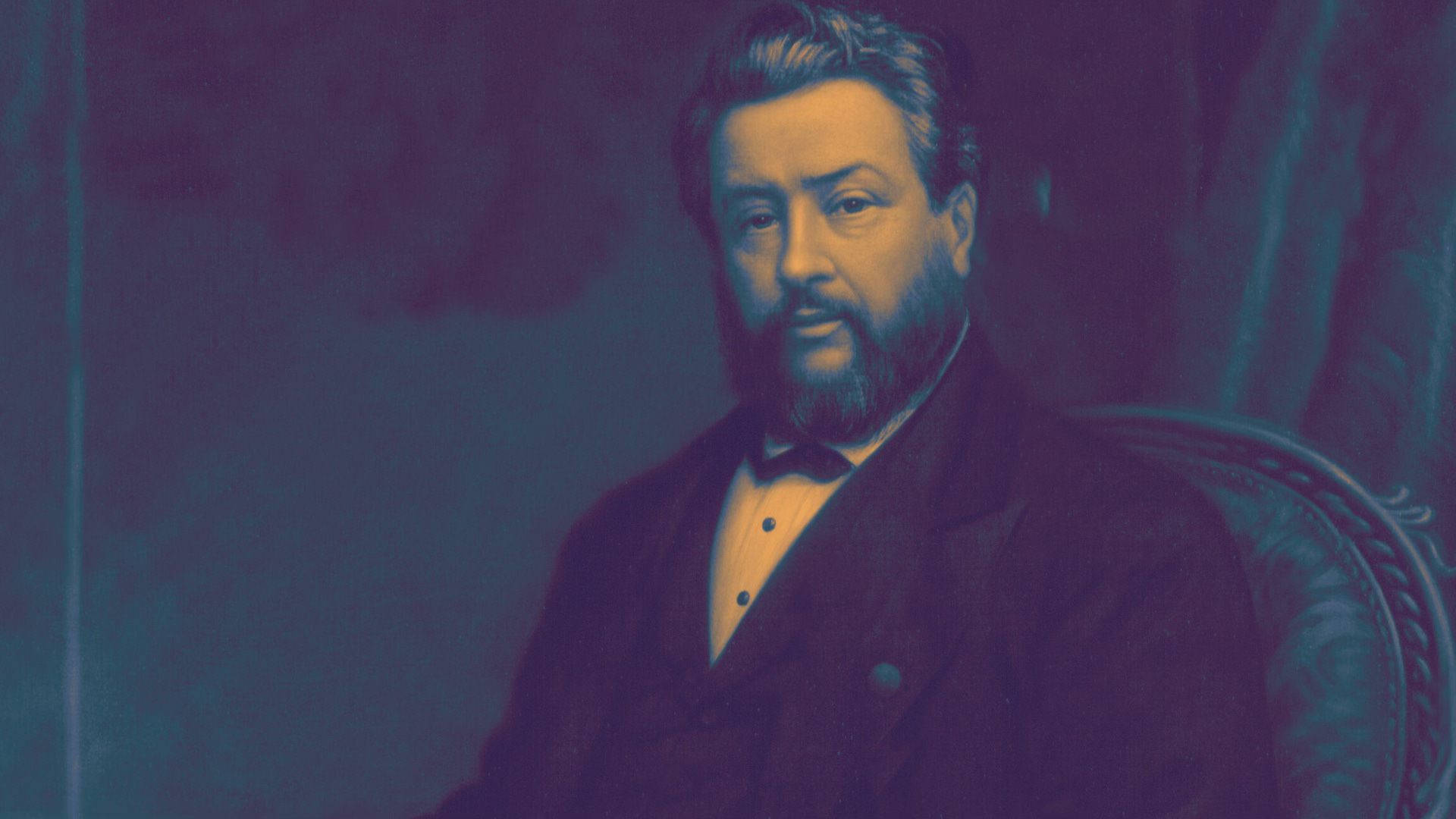

Charles Haddon Spurgeon is often referred to as the “Prince of Preachers.” I’m not sure where that nickname came from or who first gave it to him, but the title is fitting, if for nothing, the sheer abundance of homiletical “content” attached to his name. Spurgeon’s ministerial reach still puts many wannabe famous public proclaimers to shame — and “The Spurge” was doing so for reasons far more honorable than shaping a personal platform. Even still, the lionization of Spurgeon has probably gone too far into the realm of legend, at times, leading some to forget that C. H. was made of the same stuff as we all are. He was, notably, susceptible to bouts with depression and endured his fair share of nibbling sheep. Speaking as a pastor, I wager he wades through the same waters of self-doubt and frustration as many do, as the calling to proclaim the Word rubs up against what those in the pews would rather hear. There are times when those two things are not the same.

In one of his sermons entitled “The Blood,” first delivered in December of 1858, Spurgeon makes a subtle allusion to this as he wonders what some might say hearing about such an “old subject” as the blood of the lamb that cleanses and saves. Endeavoring to preach on such a familiar theme as that can, to be sure, fill a preacher with no small amount of trepidation, what with the implicit expectation not to be a bore and all. What will those in the pews think if all you bring to the pulpit with you is a story they’ve heard a thousand times? I won’t lie, I’ve had to endure the same internal wrestling match. But to assuage his own misgivings at such a task, Spurgeon recalls and relays an anecdote from Baptist missionary Adoniram Judson, which speaks directly to this tension:
Do I hear some one say, that I am now coming to an old subject? This thought struck me when I was preparing for preaching, that I should have to tell you an old story over again; and just as I was thinking of that, happening to turn over a book, I met with an anecdote of Judson the missionary to Burmah. He had passed through unheard-of hardships, and had performed dangerous exploits for his Master. He returned, after thirty years’ absence, to America. “Announced to address an assembly in a provincial town, and a vast concourse having gathered from great distances to hear him, he rose at the close of the usual service, and, as all eyes were fixed and every year attent, he spoke for about fifteen minutes, with much pathos, of the precious Saviour, of what he had done for us, and of what we owed to him; and he sat down, visibly affected.” “The people are very much disappointed,” said a friend to him on their way home; “they wonder you did not talk of something else.” “Why what did they want?” he replied: “I presented, to the best of my ability, the most interesting subject in the world.” “But they wanted something different — a story” “Well, I am sure I gave them a story — the most thrilling one that can be conceived of.” “But they had beard it before. They wanted something new of a man who had just come from the antipodes.” “Then I am glad they have it to say, that a man coming from the antipodes had nothing better to tell than the wondrous story of the dying love of Jesus. My business is to preach the gospel of Christ; and when I can speak at all, I dare not trifle with my commission. When I looked upon those people to-day, and remembered where I should next meet them, how could I stand up and furnish food to vain curiosity — tickle their fancy with amusing stories, however decently strung together on a thread of religion? That is not what Christ meant by preaching the gospel. And then how could I hereafter meet the fearful charge, ‘I gave you one opportunity to tell them of me; you spent it in describing your own adventures!’” So I thought. Well, if Judson told the old story after he had been thirty years away, and could not find anything better, I will just go back to this old subject, which is always new and always fresh to us — the precious blood of Christ, by which we are saved.1
It is endearing, to me at least, that even the Prince of Preachers was eager for a dose of confidence when delivering “the old, old story / Of Jesus and His love.” What might seem tired and old hat is, in fact, the ever-fresh news that warms, enlightens, and rescues souls from the pits of hell itself. What better news could be shared? What better story might be told? The point alluded to by Judson, according to Spurgeon, is that the gospel is a story — the story of stories. While we might crave daring tales of adventure or intellectual homilies on this, that, or the other subject, there’s only one story that actually does what it says; that kills and makes alive. It’s the “wondrous story of the dying love of Jesus,” as Judson puts it. It’s the story of the Crucified One, who lived and died, and rose again, as the embodied paragon of holiness and mercy, grace and truth.
If that story is good enough for Judson and the Prince of Preachers, it ought to be good enough for me as well. Thus, with Spurgeon, I aspire nothing more than to go back, continually, to this subject that is “always new and always fresh”; to the evergreen announcement that the Christ of God had died once and for all, putting an end to “the law for righteousness to everyone who believes” (Rom. 10:4). Rather than wandering off into myths or becoming a slave to the itching ears of those in the pews (2 Tim. 4:3–4), my aim is to preach the Word, wholly and earnestly, always with an eye toward the Word who became flesh for us.
Grace and peace to you, my friends.
Charles H. Spurgeon, Sermons Preached and Revised, Fifth Series (New York: Sheldon & Co., 1859), 304–5.
Exactly. You never know if the stranger in your congregation is there for just that message.