


In many ways, the Christmas season has become one that is bound to and driven by expectations, both real and perceived. It is a time of year that is marked by Hallmark romance movies, Amazon wishlists, and television commercials where husbands surprise their wives with brand-new luxury cars on Christmas morning. The “hap-happiest season of all” has devolved into a month-long dash to make sure everyone’s expectations are met, including our own. More often than not, though, our expectations are dashed. Whatever gizmo or gadget you expected to find neatly wrapped under the tree was missing come Christmas Day. No new iPhone, Mercedes-Benz with a big red bow, hippopotamus, or deed to a platinum mine to be found. What we expected isn’t what we got. This phenomenon happens with such frequency that retailers and corporate executives forecast billions (with a “B”) of dollars every year in returns and/or exchanges.
In fact, in 2020, even though just over 10% of all holiday gifts were returned after the holidays, this still amounted to just under $430 billion worth of products and goods. If there’s anything that encapsulates modernity’s devotion to consumerism, it’s the long lines of shoppers returning gifts the day after Christmas. When our expectations go unmet, we are given to disappointment, frustration, and disillusionment, which prompts us as consumers to exchange what we received for what we expected. A better solution, though, would be to have your expectations recalibrated to something better. This is true both for consumers during Christmas and for the people of God in general. In other words, the plague of unmet expectations and their fallout affects both retail store customers and churchgoers alike.
Our feelings of disappointment or discouragement with the way things are in the world are more often than not directly related to misplaced expectations regarding what God is or isn’t supposed to be doing. We’ve come to believe that God should be doing this, that, or the other thing, only he’s not. He is letting injustice persist and corruption escalate, with the same old problems wreaking havoc on humankind. What do we do with that? How do we make sense of this? Where do we go when our existential expectations are dashed? In many ways, this puts us in some good company since even Jesus’s most outspoken supporter felt the stress and strain of misplaced expectations.
1. John the Baptist’s Crisis of Faith
John the Baptist is in a class all by himself. Jesus says as much when he attests that “among those born of women there has arisen no one greater than John the Baptist” (Matt. 11:11). No one could rival John’s faith, candor, or devotion to the words of God. He was, to use Jesus’s words again, “more than a prophet” (Matt. 11:9). But, even still, he wasn’t impervious to feelings of uncertainty or doubt, which surfaces when he inquires of the Lord Jesus, “Are you the one who is to come, or shall we look for another?” (Matt. 11:3). Scholars and commentators have tried their best to explain this question so that John’s reputation stays intact.
“John wasn’t really asking this question,” they’ll say, “he only asked this question so that his disciples would be convinced of Jesus and turn their attention to him.”
“John never doubted. He just asked this question to answer the doubts of his followers.”
This interpretation and explanation fall flat both hermeneutically and existentially, ignoring both the context of the passage itself and the simple fact that John was a human being. As great as he was, John the Baptist wasn’t some “superhero” disciple of the Living God who had unlocked the code to spiritual invincibility. Rather, he was composed of flesh and blood just like us, which means he was just as susceptible to doubt, confusion, and frustration. “It would have been wiser,” Alexander Maclaren concurs, “if commentators, instead of trying to save John’s credit at the cost of straining the narrative, had recognised the psychological truth of the plain story of his wavering conviction and had learned its lessons of self-distrust.”1 John’s question, therefore, was likely the question everyone was asking themselves, he just had the nerve to ask it out loud.
Taking the circumstances into consideration, John’s question makes perfect sense. As we are told, he is “in prison” (Matt. 11:2), which is where he has been for the last six months to a year (Matt. 4:12). He was put there by Herod the Tetrarch, a.k.a. Herod Antipas, a.k.a. son of Herod the Great, who was not a fan of his preaching, especially since he had the audacity to call him out for marrying his brother’s wife (Luke 3:18–20). As twisted as politicians of our day are or can be, the degeneracy of the Herodian dynasty makes many of today’s issues look like child’s play. Their personal and political ambitions overruled every decision they made, resulting in a royal family that is remembered for its instability and scandals more than anything else.
For example, Herod the Tetrarch divorced his wife so that he could marry his brother’s wife, Herodias (who also happened to be his niece), because he considered it personally and politically expedient.
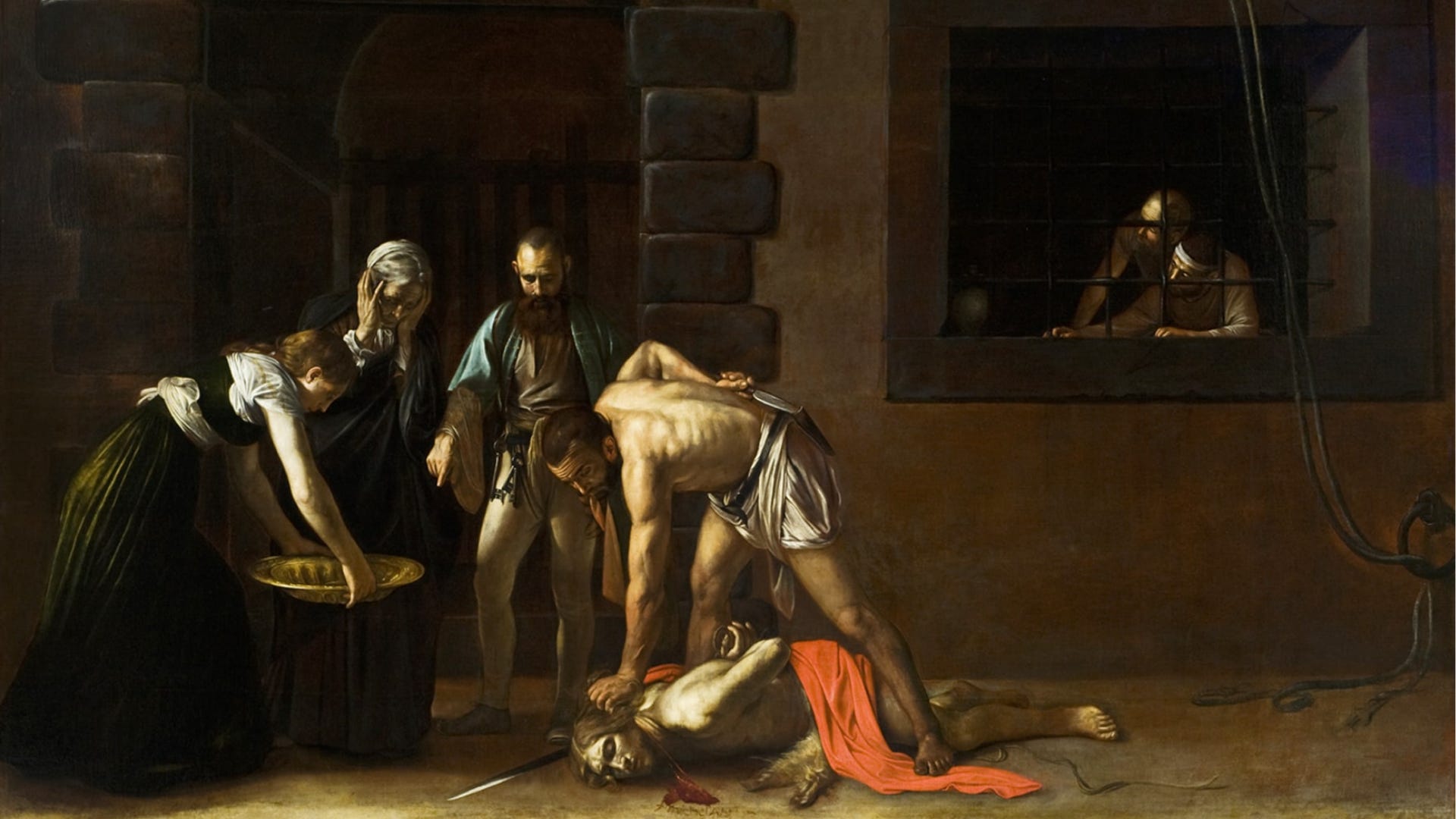
In Matthew 14, this same Herod has John beheaded to fulfill the request of his step-daughter, who “danced before the company and pleased Herod” during his birthday party (Matt. 14:1–12).
John could never have imagined he would spend the rest of his life in that jail cell, especially when you consider his ministerial career. He bursts onto the scene preaching a message of repentance since “the kingdom of heaven is at hand” (Matt. 3:2). The words of God pour out of John with the power and charisma of a prophet of God. His sincerity and passion quickly earned him a following, as large crowds flocked to hear him expound on the Scriptures, with many following his suggestion to be baptized in the Jordan River. All of his sermons, though, had the same theme — namely, the coming of the Christ of God.
2. Disillusionment with the Messiah’s Mission
John understood his calling. He wasn’t the point. Instead, he was merely the one who was supposed to get everyone ready for the Main Event, that is, for “the one who is to come.” “I am not the Christ,” he confesses, “I am the voice of one crying out in the wilderness, ‘Make straight the way of the Lord,’ as the prophet Isaiah said” (John 1:20–23). But then, just as things were getting started, they came to a screeching halt. John is incarcerated, which forces him to keep tabs on the movement he heralded through the bits of information he was privy to behind bars. Even though he was in the “prime years” of ministry, John’s ministerial career careens into a dungeon, where he never sees the light of day again. Whatever his expectations were, they were shockingly and disconcertingly dashed in short order. What he thought was going to unfold was not what was happening.
His question comes from a deeply unsettling place. “Are you the one?” he inquires, as he longs to hear from Jesus himself if he is really “the one who is to come,” which is a euphemism for the Messiah, that is, for the one who would come to set everything right (Ps. 118:26). John’s question, though, is not so much a question of Jesus’s identity as much as it is a question of his activity. “Now when John heard in prison about the deeds of the Christ,” Matthew tells us, “he sent word by his disciples and said to him, ‘Are you the one?’” (Matt. 11:2–3). Jesus’s fame is spreading far and wide, with more and more folks flocking to him for reasons both good and bad. Since John was locked up, Jesus formed an inner circle of disciples, healed masses, taught large crowds, calmed a storm, and delivered countless folks from demons. But, even still, you’re probably wondering:
Why is John asking this question?
Didn’t he know this already?
Isn’t it pretty obvious?
Wasn’t he there at Jesus’s baptism?
Doesn’t he remember the dove and the voice from heaven?
How is he not sure by this point?
The question of “Are you the one?” isn’t so much about what Jesus was doing as it is about what Jesus wasn’t doing. While John’s preaching was stubbornly Christocentric, every indication was that the Messiah’s arrival would come with an aura of judgment (Matt. 3:2, 10–12). “He envisioned the kingdom coming in terms of judgment — ax, winnowing fork, and fire,” notes John W. Carlton. “He expected Jesus to act dramatically in the overthrow of the wicked and the vindication of the righteousness.”2 John’s expectation was that the Messiah would arrive bearing reprieve and relief in one hand for God’s people and fire and judgment in the other hand for God’s enemies. “The one who is to come” was supposed to come with an “axe to grind.”
But all John hears about so far is Jesus’s reputation for mercy and penchant for showing grace to the poor, destitute, and outcast. “Hey, Jesus, where’s the judgment?” John seems to say. “If you’re the messenger of grace, where’s the messenger of judgment coming from? When should we expect his arrival? ‘Should we look for another?’” This corresponds to the common assumption in those days that the Messiah would descend from heaven to put an end to tyranny, squash injustice, and deliver God’s people from oppression. The prevailing expectation of “the Christ” in the first century was tethered to a charismatic leader who would be in a position to bring Israel back to the height of its glory and usher in the kingdom of heaven. However, John, along with everyone else, seemed to notice that Jesus wasn’t doing that.
Jesus of Nazareth wasn’t keen or interested in taking the fast track to political influence or social stardom. He is the one who will, indeed, make everything right, but that means something far deeper than a new political regime or religious revolution. He would be the one who would “take away the sins of the world,” as the Baptizer testified about him (John 1:29), but the way in which this would be accomplished wouldn’t align with anyone’s expectations, especially since Jesus himself would be the one to bear the weight of the world’s sins on his own shoulders.
3. The Scandal of Grace
“Christ inverts our expectations for a powerful ruler with the arrival of a paradoxically powerless Messiah,” Kollin Absher-Baer once wrote, “one who descends into the fleshliness of our humanity to be like us and with us.” Jesus’s messianic expectation was entirely incongruous with what was expected of him by the religious gallery. This comes to the fore when he brings to fruition the divine prerogative to take away sin by becoming sin for the sake of a world full of sinful human beings (2 Cor. 5:21). His mission as the Christ of God is only realized in the scandal of the cross, which is why he adds an extra “beatitude” in his reply to John. “Blessed is the one who is not offended [skandalizō] by me” (Matt. 11:6). There is nothing more scandalous or offensive than God’s Messiah pegged to a Roman cross. But Jesus seems to say that not only was he aware that this was in store for him, but also that this would be the culminating revelation of who he is.
Every “deed of the Christ” crescendos on the cross — that place of abject defeat and horror that is also the place of pardon and remission of sins. When Jesus responds to John’s inquiry, rather than belittling him for doubting or for having the wrong expectations, he corrects him and builds him back up by pointing him to the Word of God (Matt. 11:4–6). This is why Jesus’s reply consists of two messianic prophecies from the prophet Isaiah (Isa. 35:5–6; 61:1–3) as if to say, “You already know the answer, my friend.” “It is not Christ’s work which is wanting in conformity to the divine idea,” Alexander Maclaren comments, “it is John’s conceptions of that idea that need enlarging.”3 R. C. H. Lenski similarly explains:
In his answer Jesus says nothing about the ‘vengeance’ (Isa. 35:4) and the judgment. The omission is significant. John is to leave that in the hands of him who is so gloriously fulfilling the prophecies regarding the Messianic works of grace . . . He is not to let the absence of certain works blind him to the glorious presence of the works now in full progress. Let him be satisfied with these and trust that in due time the others will follow just as these are now being done.4
Jesus was doing precisely what the Messiah was promised to do, just not what John or anyone else expected him to do. Far from making any sort of claim to “messianic greatness,” Paul S. Minear says, Jesus “epitomizes messianic lowliness.”5
4. Advent and the Recalibration of our Expectations
John’s expectations were in desperate need of recalibration, which Jesus supplied through the scandal of grace he was inclined to offer. The necessary recalibration occurs when John’s expectations are reoriented toward the words of God. Accordingly, our expectations will be perennially misplaced and left unmet as long as we base them on something other than God’s Word. Indeed, we are sure to be swiftly disappointed and discouraged if we let anyone or anything set our expectations for us. This goes for Harvard professors, Wall Street financiers, D.C. bureaucrats, and televangelists. The Word alone is what informs us of the way God works in us and in the world.
The point is that Advent is a season all about having your expectations recalibrated. It is a time of “good news of great joy” since the Christ of God hasn’t come to meet our expectations but to exceed them all in the brilliance of his scandalous grace. It is a divine reminder that God is in the business of keeping his promises, but rarely in ways that we expect or anticipate. After all, the world’s Savior and King was born in a trough meant to feed livestock and died on a cross between two thieves like any other criminal. Much to our surprise, God isn’t interested in giving us what we want or expect. Instead, he’s interested in giving us himself, which, as it turns out, is so much better.
Alexander Maclaren, Expositions of Holy Scripture, Vols. 1–17 (Grand Rapids, MI: Eerdmans, 1944), 7:1.122.
John W. Carlton, “A Case for Tentativeness,” Faith and Mission 5.1 (1987): 79.
Maclaren, 7:1.124.
R. C. H. Lenski, The Interpretation of St. Matthew’s Gospel (Minneapolis, MN: Augsburg, 1964), 428–29.
Paul S. Minear, “On Seeing the Good News,” Theology Today 55.2 (1998): 167.
His grace is always more than we can ever ask or think!
I have often pondered these very verses. Your careful exposition of the Word is eye opening. Thank you for being an expositor of God's grace to us.