



As a preacher, I have a vested interest in how the preaching event, if you will, is perceived and understood, both by the preachers themselves and those to whom they are preaching. This is no “conflict of interest,” mind you — just an interest that bears itself out in an obscene amount of conversations, sometimes with myself, concerning the current state of preaching. It probably goes without saying that “preaching” is a function of the church that always seems as though it’s in a state of flux. From Madonna’s “Papa Don’t Preach” to Springfield’s Rev. Lovejoy to Rian Johnson’s Monsignor Wicks, preaching and preachers have achieved pop culture status, just not the kind that’s doing you any favors at popularity contests.
This, of course, isn’t meant to be a homiletical pity party, especially since most of the damage done to the preaching vocation has been self-inflicted. There are scores of preachers — too many to keep track of, honestly — that haven’t done the rest of us pulpiteers any favors. Unsurprisingly, according to the latest poll from Gallup’s Honesty and Ethics Survey, the aggregate trust in members of the clergy by the general populace recently hit historic lows. It would seem that the crisis of “peddlers of God’s word” annexing influence over the Body of Christ still persists (2 Cor. 2:17).
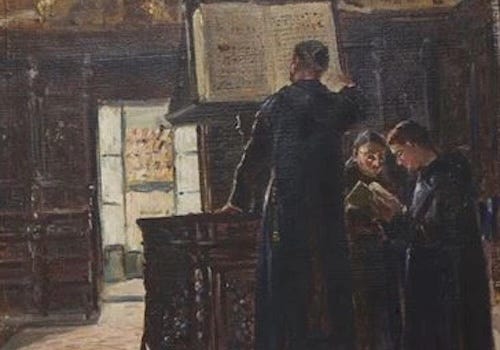
One could cite a cavalcade of reasons for this decline in public trust and public regard, with integrity and personal accountability being chief among them. The lack of checks and balances on pastors, especially those who serve in solo positions, is one of the many catalysts for the reckoning that has occurred within the Southern Baptist Convention, though not relegated to only that denomination. In many ways, those who disparage Christ’s name by holding the pastoral office while coddling perversion are, more often than not, culprits of other pastoral offenses, among which is the gradual withdrawal from holding fast to the divine resonance of the preaching event.
Homiletical methodology and pedagogy are a dime a dozen. And although I’m not what you would call “wet behind the ears,” I don’t presume to have preaching “figured out.” No one does. But — anecdotally, I’ll admit — there seems to be a collective diminishing of sobriety when approaching the public proclamation of God’s words. I’ve come across one too many headlines of preachers dressed up like Pixar characters or impaling themselves with props or, God forbid, pouring pancake syrup on the very Bible from which they’re preaching. We may not be short on theatrics — not by a long shot — but we are short on what makes preaching “preaching.”
And what is that? In his The Essential Nature of New Testament Preaching, the late Robert H. Mounce helps us out by bringing to bear the divine and redemptive resonance that ought to occupy every pulpit and preoccupy the heart and lips of those who stand behind them:
Preaching is that timeless link between God’s great redemptive act and man’s apprehension of it. It is the medium through which God contemporizes His historic Self-disclosure and offers man the opportunity to respond in faith. Without response, revelation is incomplete. Without preaching, God’s mighty act remains an event in the past. What man desperately needs is a redemptive encounter in the ever-present Now. Preaching answers to this need by contemporizing the past and moving the individual to respond in faith. The contemporaneity of what took place long ago is an ultimate and inescapable miracle of Christianity. It defies explanation. Yet without this miracle, preaching is not really preaching.1
_-_James_Tissot_-_overall.jpg)
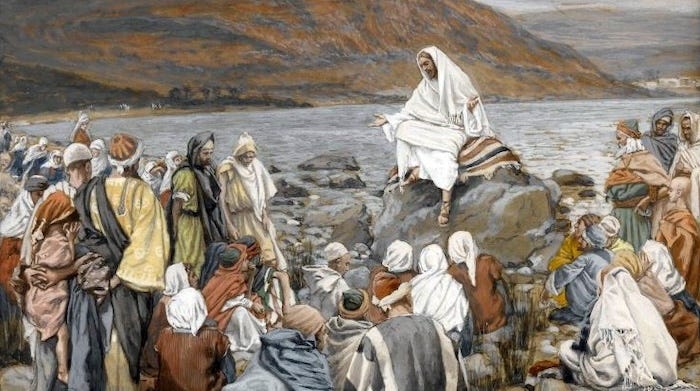
Just as God the Father delighted in divulging his loving, forgiving, reconciling heart through the Word become flesh (John 1:14, 18), stunningly, he continues to do so, disclosing who he is through the Word borne on the lips of preachers (Rom. 10:17). The role of the preacher, therefore, isn’t merely to stand as a conveyor belt of hermeneutics or doctrine or biblical history. Rather, it is to be the vehicle through which God our Savior carries on his affinity for self-disclosure, for turning sinners into saints and bringing them further up and further into himself.2 And all that’s there is grace.
And this is why the sermon cannot and must not be substituted for mere spectacle or sacrificed on the altar of political urgency, however acute, pressing, or important that may seem at the time. Because without the Word filling the words that echo from pulpits, the church becomes a shell of itself. Indeed, it becomes mute. Apart from the proclamation of the mystery of grace in the person of Jesus, the church has nothing much left to say to a world that is desperate for hope.
Grace and peace.
Robert H. Mounce, The Essential Nature of New Testament Preaching (Eugene, OR: Wipf & Stock, 2005), 153.
“Then he breathed upon me and took away the trembling from my limbs and caused me to stand upon my feet. And after that, he said not much but that we should meet again, and I must go further up and further in.” C. S. Lewis, The Last Battle (New York: Harper Collins, 2000), 155.
Thank you.
Thank you Pastor Bradly! Proclamation of the good news!