


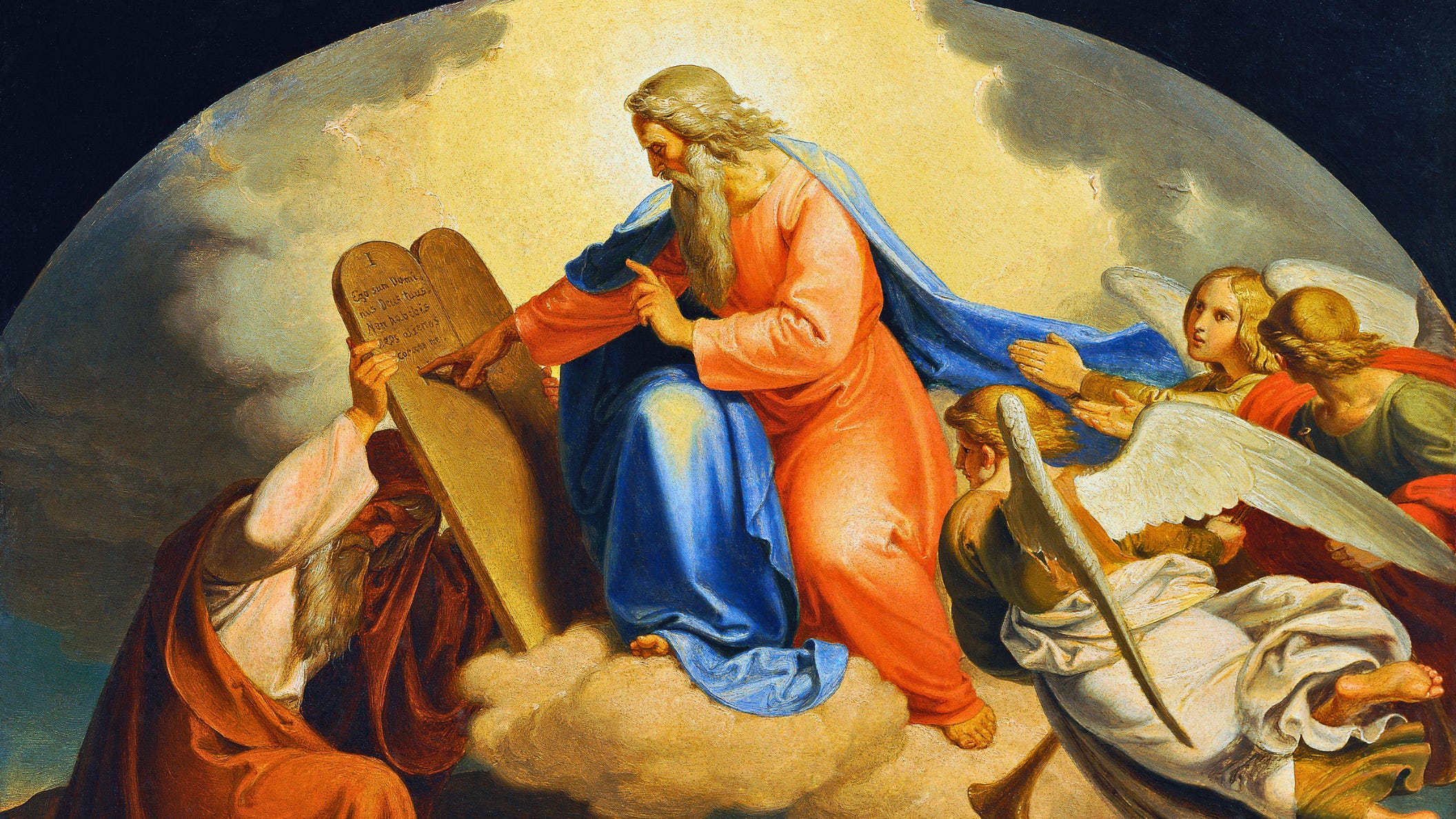

One of the most remarkable moments in the history of the world occurred when God chose to inscribe the terms of his covenant with Israel with his own finger (Exod. 31:18; Deut. 4:13). This, to be sure, is nothing to blink at. Instead of God creating via speaking, he’s covenanting via writing. He is, in the most literal of senses, giving his Word to his people.
Approaching the Ten Commandments — or Decalogue1 for you high-church folk — let alone the rest of the Mosaic Law, begs the Christian to ask, What are we supposed to do with all of this? What’s with all these rules and regulations? Do we even have to bother with them? Are they still in effect? Are they for us? Some pastors would tell you no, that you don’t need to follow the law since Jesus has come and done what he did. In fact, you’re free to pretty much ignore most of the Old Testament, while you’re at it. On the other hand, others will tell you that your Christian faith means nothing until you set about keeping the law exactly as written, which is terrible news for bacon connoisseurs.
As you’re probably aware, the question of the purpose of the law has been a persistent thorn in the church’s side, especially for those who live in the “church age.” It doesn’t help matters much when Paul says that “Christ is the end of the law,” and that “the law is holy, righteous, and good” all in the same letter (Rom. 7:12; 10:4). So, which is it? Well, the frustrating answer is it’s both. God’s law remains “holy and good,” and binding on us, the church, even still. Yet, because of Christ, who was and is the law’s consummation, it isn’t binding on us in the same way as it was for Israel.
1. God’s Description of Himself
I’m convinced that preachers do their churches a disservice so long as they suggest that the law can be disregarded, especially since it was none other than the I Am who spoke it and wrote it down in the first place (Exod. 20:1–2; cf. 3:13–15; 6:2, 7). Out of the thick, pluming clouds that descended on the summit of Sinai boomed the voice of Yahweh (Deut. 5:22), certifying that everything Israel was about to hear originated with and is derived from God alone. This wasn’t a series of man-made ideas or human constructs. The Decalogue is a divine arrangement.
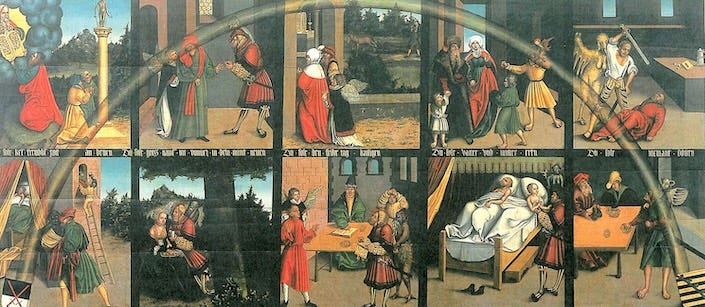

This moment constitutes the one true God telling his children how to live as his people, as his “kingdom of priests.” Long before God’s Son took on flesh and roamed the earth, the heart of God was displayed on two tablets of stone. Each law declared to Moses is a reflection of the holiness of the Father back to us, expressing something of God’s essence to us. “Each precept of the law,” J. Alec Motyer says, “expresses some principle, some essential feature, of the divine nature. Each commandment represents some aspect of the likeness of God.”2 “His holy law,” Stephen H. Tyng once succinctly wrote, “is a description of himself.”3 And who are we to negotiate or edit that description?
We sometimes run into this around the dinner table.
At least one of our three kids will twist the “no dessert until your dinner is finished” rule into a negotiation.
“How many bites?”
This is when I am forced to remind them that there’s no negotiating at the dinner table.
God’s words are imbued with an unyielding and unrelenting weight. It’d be the height of human conceit to assume that we can hash out the terms of agreement with God. It’s the same picture that the prophet Isaiah gives us when he highlights how preposterous it’d be for a lump of clay to make demands of its maker (Isa. 45:9). The clay is in no position to haggle with the potter, and so are we in no position to revise what the Creator has ordained (Isa. 45:18–19). And not merely their Creator — their Redeemer. “I am the Lord your God,” he announces, “who brought you out of the land of Egypt, out of the house of slavery” (Exod. 20:2).
Within God’s prologue to the law, he brings to mind all that he did for them. Put differently, the Decalogue is downstream of God’s deliverance. These commands weren’t given arbitrarily. Rather, they were given to those whom he rescued from slavery and death, which is why he says that he’s “jealous” for them (Exod. 20:5). Like a husband is jealous for his bride’s attention and affection, so is Yahweh jealous for his people. He isn’t interested in his people having divided loyalties. He wants their full and undivided devotion since he’s the one who purchased them for himself (Exod. 15:13, 16; cf. 1 Cor. 6:19–20).
The law wasn’t offered as a way for Israel to become the people of God or to bring them into a relationship with him. Both of those realities were already true of them. “The people were given the law not in order that they might become the redeemed,” J. Alec Motyer comments, “rather it was because they had already been redeemed that they were given the law.”4 “Obeying the law didn’t make them the children of God,” Michael P. V. Barrett says, “it revealed that they were His children.”5 The Ten Commandments were given as a way for God’s people to live as the people of God.
2. The Mirror That Makes You Tremble
Perhaps the most intriguing part of the entire Sinai narrative appears after the Decalogue, when God’s people hear him speak, leaving them shaking in their sandals with fear:
Now when all the people saw the thunder and the flashes of lightning and the sound of the trumpet and the mountain smoking, the people were afraid and trembled, and they stood far off and said to Moses, “You speak to us, and we will listen; but do not let God speak to us, lest we die.” Moses said to the people, “Do not fear, for God has come to test you, that the fear of him may be before you, that you may not sin.” The people stood far off, while Moses drew near to the thick darkness where God was. (Exod. 20:18–21)
The sights and sounds of God’s holiness in “the thunder and the flashes of lightning,” and in the Ten Words, brought them to their knees, so much so that they cried out for the Lord to stop talking to them. His holiness was so unbearable that they were forced to stop their ears and keep their distance. This is precisely because part of what the law shows us is our failure to keep it. Its ministry to us functions similarly to the way a mirror helps us in the morning.
The good and bad of a mirror is just the fact that it doesn’t tell a single lie. It just shows you, you. And depending on how hard you’ve slept or how rough your night was, what you see isn’t always pretty. (Or maybe I’m just speaking for myself.) But, in a way, that’s a good thing, especially if you have a date to get ready for or a job interview later in the day. Only a fool would glance at a mirror and walk away without taking into consideration what the mirror revealed (James 1:22–25). Or, to put it differently, only a fool would see the mirror’s reflection and presume there’s a problem with the mirror.
The question often arises: Why would we be bound to keep that which we can’t keep? Since no one in this life can obey the Decalogue perfectly, why would the Lord want them preached? Because just as a bad case of bed-head doesn’t correspond to a problem with your mirror, God’s law isn’t the issue. It needs no amount of tweaking, especially not by the likes of us. We’re the ones with the problem. In other words, when the Israelites were reduced to puddles of fear, the law was doing what it was designed to do.
3. The Altar at the Bottom of the Law
God’s holy law shows us that we’re not holy. No one’s meant to read through the Decalogue and walk away thinking, “Yeah, I got this. Piece of cake!” Rather, we’re meant to feel the weightiness of every line and precept. The law never lets us off the hook. We break it before breakfast.
But here’s the point: The fear of the Lord produced by the law isn’t meant to keep us away forever. Instead, it’s meant to drive us toward him, specifically to the one who can do for us what we can never do for ourselves. And how do I know that? Because immediately after God’s people beg for someone else — i.e., a mediator — to speak to them, he motions toward an altar, that place of blood, smoke, sacrifice, and death (Exod. 20:22–26).
The wreckage left in the wake of the law doesn’t spur God to soften, nor does he take to revising it since his people can’t live up to it. When all the smoke of Sinai has cleared, God doesn’t take Moses aside and tell him, “Relax, I was kidding; here’s a law you can keep.” The answer to his people’s distress isn’t to make the law more manageable. That’s what we try to do. Rather, to quote J. Alec Motyer again, when “the Lord’s people cannot rise to his requirements, he does not lower his standards but rather he lifts up his people.”6 God’s solution for those who are undone by the law is to point them to the place where all their transgressions and sins are atoned for, where something dies in the place of those who deserve to die.
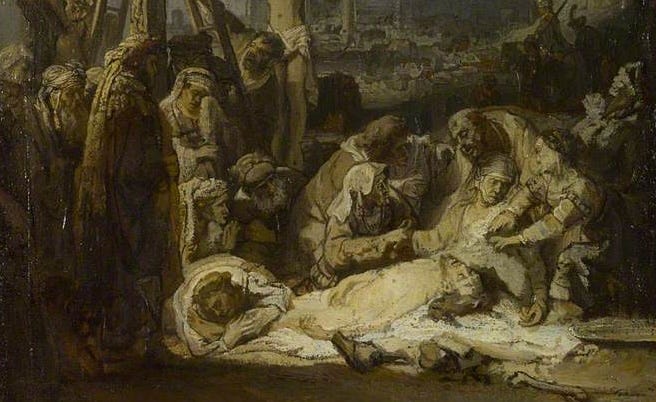
It could be an altar made of mud or an altar made of uncut boulders; either way, the only thing that matters is the sacrificial substitute on top of the altar. Because when the substitute dies, the guilty live. This isn’t a loophole in the law; this is God being both just and the one who justifies. Thus, whenever an altar was drenched with smoke and viscera, it gestured forward, till on a hill just outside Jerusalem, God’s Son ascended the altar of the cross, bearing the weight of sin and an unsoftened law, and satisfied both when he gave himself up to death.
4. The End of the Law
Jesus tells us how this uncompromisingly holy law reveals life to us when he announces that he hasn’t “come to abolish the Law or the Prophets, but to fulfill them” (Matt. 5:17). The keyword there, “fulfill,” is indicative of bringing something to completion. Jesus didn’t arrive on the scene just to toss out the law hook, line, and sinker. Rather, he came to be everything that the law was pointing toward (Gal. 4:4, Heb. 5:8–9). This brings us back to Paul’s assertion that Christ is “the end of the law” (Rom. 10:4).
“End” doesn’t simply mean “over and done.”
“End” here is telos.
Meaning, the goal, the aim, or the purpose for which something exists.
The telos of the law is Jesus himself.
Christ is the endpoint to which every line and every precept of the law is drawn. This is why he told the Pharisees that if they believed Moses, they would believe in him, “for he wrote of me” (John 5:46). This is also why he told the guys on the Emmaus Road that all Scripture has him as its main concern (Luke 24:27). Indeed, this is why, when asked to give a summary of the law, he distills all of it into loving God and loving your neighbor (Matt. 22:36–40). In so doing, Jesus wasn’t replacing the law with something novel. Instead, he was showing the heart of the law, and making it evident what he had come to do — namely, to love God the Father with undivided devotion and love his neighbors all the way to the cross.
5. The Path’s Been Cleared
Even with the incredible news that God’s Son has embodied and completed the law for us, that doesn’t mean the Decalogue is irrelevant. As its telos, he’s the one who gives it its meaning. For we who’ve been “brought out,” the law isn’t a ladder to climb our way up into God’s favor. Instead, the law is a roadmap or a guide, revealing to us both the life epitomized by Jesus and the life to which we are being conformed by grace.
Reading God’s law as one who has been redeemed shouldn’t feel like reading a list of restrictions or impediments on the fullness of life we might otherwise enjoy if we had our way. We do that, though. The Old Adam in us coaxes us to assume the law is a cage, without which we’d be freer, fuller, or happier. The reality is, though, that God’s law is more like rows of hedges that line the path on which you are walking. Those trimmed hedges or stone fences don’t make walking paths worse; they make it possible by showing you where to go. Similarly, the law shows us the way, God’s way. The problem is, we couldn’t walk that way, and we still have a hard time doing so.
I love those videos online where a guy clears up those wildly unkempt lawns. After finding the yard with the most amount of brush and the tallest grass, he’ll spend the better part of a day cleaning it up for free. There’s something so satisfying about watching what was overgrown and weed-infested be made pristine again. The gospel tells us that this is what Jesus has done and is doing in you and in me.
Before Christ, our lives were like that overgrown yard. We couldn’t find our way. We didn’t even know there was a sidewalk there! We were lost in all the overgrowth of our sin and rebellion. But in comes Christ to clear the way for us by walking that path for us, all the way to the cross, only then to rise again and invite us to follow him along the very path he has cleared for us. This is the trajectory of the gospel: God saves us and then, by his Spirit in us, he takes up the task of reshaping us into people whose lives are contoured to him.
Following the Decalogue doesn’t make you a child of God. Rather, it’s meant to show your neighbor that you already are. And while the law tells you what you should be, Christ shows you who you already are by faith, since he came to be what you could never be and do what you could never do.
Accordingly, when Paul says that the Spirit fulfills “the righteous requirement of the law in us” (Rom. 8:4), the Spirit does so not by erasing the law’s demands, but by writing them on our hearts (Jer. 31:33). And what Jeremiah promised in his prophetic word, Paul says, has already arrived. “You show that you are a letter from Christ delivered by us,” he declares, “written not with ink but with the Spirit of the living God, not on tablets of stone but on tablets of human hearts” (2 Cor. 3:3). What God once wrote with his finger on stone, he now writes by his Spirit on you, not because you kept the law, but because Christ kept it for you.
“Decalogue,” by the way, comes from the Greek dekalogos, meaning “ten words,” alluding to the scriptural designation for the Ten Commandments (cf. Deut. 4:13; 10:4).
J. Alec Motyer, The Message of Exodus: The Days of Our Pilgrimage, Revised Edition, The Bible Speaks Today (Downers Grove, IL: InterVarsity Press, 2021), 206.
Stephen H. Tyng, Lectures on the Law and the Gospel (New York: Robert Carter & Bros., 1849), 12.
Motyer, 205.
Michael P. V. Barrett, The Gospel of Exodus: Misery, Deliverance, Gratitude (Grand Rapids, MI: Reformation Heritage Books, 2020), 182.
Motyer, 212.