



A version of this article originally appeared on 1517.
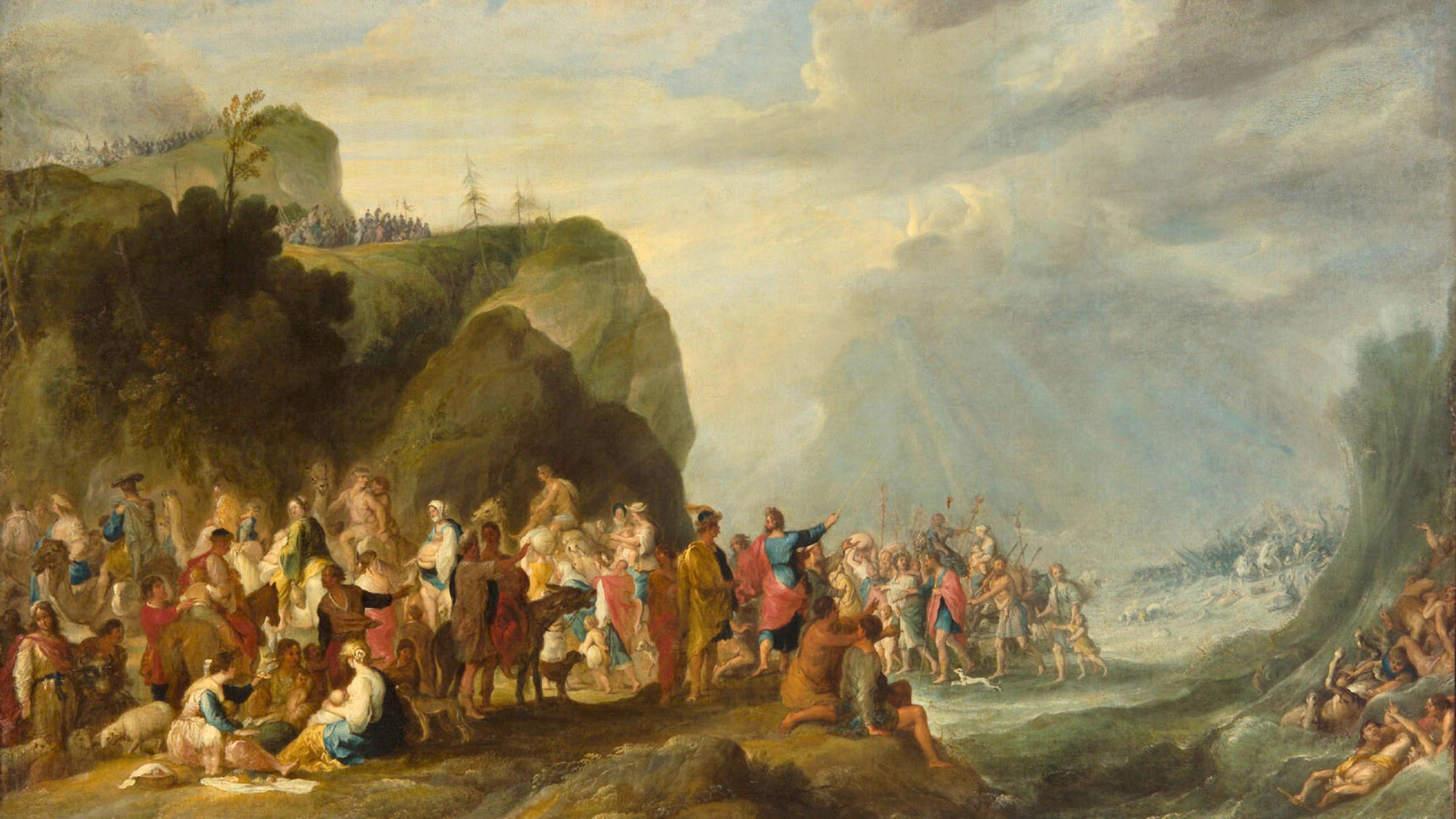
One of the things that makes understanding Israel’s sojourn in the wilderness so difficult is the simple fact that many of the landmarks that are mentioned through the biblical narrative have been lost to time. Scholars and archaeologists have spent a ton of time attempting to locate sites such as Pi-hahiroth, Migdol, or Baal-zephon with little success. But in many ways, the opening verses of Chapter 14 of Exodus are less about geographical precision and more about apparent theological indecision. Consider what’s transpired thus far. The Israelites have been brought out of centuries of bondage only to be led along the treacherous “way of the wilderness” (Exod. 13:18), only to now be told to turn back and go back the way they came to set up camp “by the sea” (Exod. 14:1–2). Questions concerning Moses’s decision-making already abounded. Imagine what the crowds were saying about him now.
Are we lost?
Why did we go this way?
Why are you in charge again?
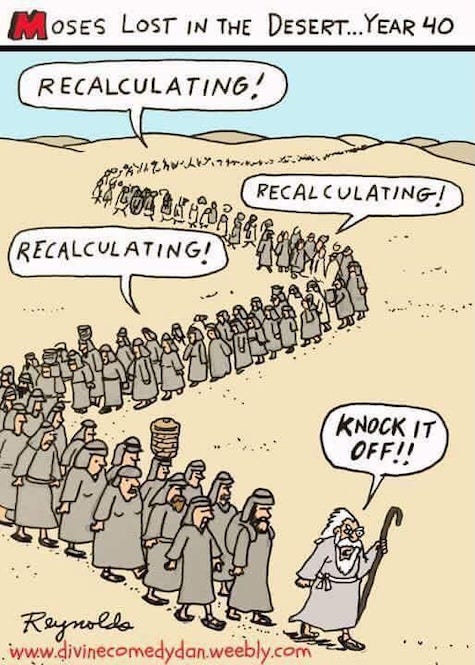
But as strange as it might’ve seemed for their leader and deliverer to declare one heading, only to announce a new one the very next day, they weren’t traversing that terrain by accident. God, of course, had a purpose behind it all, behind all the apparent meandering (Exod. 14:3–4), a fact that will remain true throughout all of Israel’s four decades of wandering. From the outset, though, we are shown what it means to follow the Lord. Following him and being led by him means getting a front-row seat to his penchant for self-disclosure. Egypt, along with God’s own people, would soon know that Yahweh alone is the Lord (Exod. 14:4).
1. Getting Lost on Purpose
Of course, God knew what he was doing, and they didn’t. They couldn’t see what he was doing in the moment. But the Lord knew how hard Pharaoh’s heart was. He knew the depths of his conceit and callousness, and that the hubris of the king of Egypt would be his own undoing. Thus, once again, he is turned over to his own devices, just as he was throughout the plagues (Exod. 14:4, 8). Sitting in his palace, still mourning the loss of his firstborn son, Pharaoh’s grief turns to self-justified outrage, suddenly realizing that he has played the fool by losing his entire labor force in one fell swoop. He almost becomes furious with himself for letting himself get duped into letting Israel go scot-free.
After hastily readying his chariots to pursue the Hebrews like hounds after a fox, they quickly overtook that congregation of former slaves, whose spirits were still on the mend (Exod. 14:6–9). This put Israel in a real pickle. They were hemmed in on every side, with a sea in front, treacherous terrain on their flanks, and a bloodthirsty army behind. It’s not difficult to imagine how low their hearts sank. Indeed, from a human perspective, their fear makes sense. But alongside their sheer terror and utter hopelessness, we’re privy to a few other sinister symptoms:
When Pharaoh drew near, the people of Israel lifted up their eyes, and behold, the Egyptians were marching after them, and they feared greatly. And the people of Israel cried out to the Lord. They said to Moses, “Is it because there are no graves in Egypt that you have taken us away to die in the wilderness? What have you done to us in bringing us out of Egypt? Is not this what we said to you in Egypt: ‘Leave us alone that we may serve the Egyptians’? For it would have been better for us to serve the Egyptians than to die in the wilderness.” (Exod. 14:10–12)
2. Hemmed In and Looking Back
Israel’s horror had turned into a vicious pairing of cynicism and despair. Whatever sense of joy that surged through them during the Exodus was all but evaporated. “What, have you brought us out here to die, Moses?!” “What, was there no more room to bury us back in Egypt? Is that why you brought us here?” “Why didn’t you just leave us alone?” Israel was crestfallen. Disconsolate. Things were so grim, in fact, that they started fantasizing about going back to Egypt and reversing the Exodus. Apparently, every able-bodied Israel was struck with a sudden case of amnesia, forgetting how cruel and ruthless their taskmasters were. They’d rather reminisce on the supposed comforts of slavery than suffer the hardships of faith.
In other words, Israel was still a nation that trusted in what it saw more than in what it believed. They hadn’t yet learned what it means to “walk by faith and not by sight” (2 Cor. 5:7). And before you get ahead of yourself, none of us has learned that lesson. Walking by faith and not sight is something that takes a lifetime to grasp, often involving our faith being put through the wringer.
3. When Sight Overrules Faith
As visual creatures, we rely on our senses to get by. We observe the world around us, noting its dangers, in order to make decisions that will allow us to survive and/or thrive. This is why faith doesn’t come naturally to us. It’s not something you’re born with. Rather, it’s something that’s given to you when God’s words are preached (Rom. 10:17). Faith sounds foreign precisely because it invites us to base our decision-making not on what we see but on what God has revealed and promised to us, even when those look like dim realities at best. This was the lesson Israel was about to learn, and fast.
What transpires on the banks of the Red Sea is a good example of a so-called “baptism by fire.” According to everything they could see, Moses had accomplished little more than marching Israel to its doom. But just as all hope seemed lost, with the blood of two million ex-slaves about to be on his hands, Moses speaks a word from the Lord. “Fear not, stand firm, and see the salvation of the Lord, which he will work for you today,” he declares. “For the Egyptians whom you see today, you shall never see again. The Lord will fight for you, and you have only to be silent” (Exod 14:13–14).
Not only are these some of the most consoling words in Scripture, but Moses is also testifying to the unilateral saving action of God, which means that this must be seen as an Old Testament version of the gospel.1 In other words, this is the Word that engenders faith in the hearts of those who receive it. As Moses the preacher ambles up in front of a crowd of disillusioned and disheartened followers, he insists that they had every reason for faith, not fear.
Visually speaking, there were ample grounds to cower or give up. But the word of faith and promise that was heralded to them told them that they had infinitely more grounds to trust in the Lord, who had already brought them through the plagues and brought them out in the Exodus. Moses, therefore, summons them to take their stand and watch how their God would work out their salvation, right in front of their very eyes. There would be no mistaking that Israel’s deliverance was divine, since God himself would fight their battles for them (Exod. 14:14; cf. Deut. 1:30; 20:4; Josh. 10:14, 42; 23:3; 2 Chron. 20:15, 29; Neh. 4:20).
4. The Word That Creates Faith
As the Lord shepherds his people in the way that they should go, he often leads them to a place where all they have is faith. Where what they see matters less than what they believe and know to be true. God’s words to Israel through Moses tell the good news that the war they could never win on their own is the one he fights for them. They needn’t be alarmed, dismayed, or perplexed. They needed “only to be silent” (Exod. 14:14). Instead of crying aloud about how all was lost or clamoring about Moses’s inept leadership abilities, the Word of God calls the people of God to put their faith in God. And what does that look like? It looks like fearing not, standing firm, being silent, and going forward.
The Lord said to Moses, “Why do you cry to me? Tell the people of Israel to go forward. Lift up your staff, and stretch out your hand over the sea and divide it, that the people of Israel may go through the sea on dry ground. And I will harden the hearts of the Egyptians so that they shall go in after them, and I will get glory over Pharaoh and all his host, his chariots, and his horsemen. And the Egyptians shall know that I am the Lord, when I have gotten glory over Pharaoh, his chariots, and his horsemen.” (Exod. 14:15–18)
God invites a people, paralyzed by fear, doubt, and unbelief, to step out and move forward in faith anyway. This moment, therefore, allows us to get a glimpse at the nature of biblical faith. For one to put one’s faith in the God who shepherds his people isn’t commensurate with fearlessness. It doesn’t mean we never get scared, nor does it mean that we’ll never experience times that are difficult or distressing. And anyone who tells you otherwise is lying to you. Rather, faith just means that our trust in who God is outweighs and outvolumes how fearful we are. It’s his words and promises that speak louder than what’s causing us to be fearful.
5. The God Who Fights for His People
Israel learned this in real time, as God Almighty gets the glory over his people’s pursuers, all while letting everyone know what type of God he is. As with the plagues, he is revealing himself not only to the Egyptians but to his own people, in ways that no human could ever fathom. This, to be sure, is why he chose the way of the wilderness in the first place. Not only because he knew his people, but also because he wanted them to know him. This fretful moment became an occasion for the shepherding pillar of cloud and fire to be their shield (Exod. 14:19–20). Not only was he a God who was present for them, but he was also a God who intervenes to protect and preserve them by exercising his authority over all things.
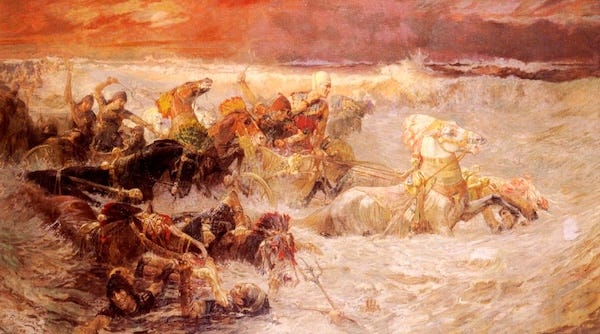
Then Moses stretched out his hand over the sea, and the Lord drove the sea back by a strong east wind all night and made the sea dry land, and the waters were divided. And the people of Israel went into the midst of the sea on dry ground, the waters being a wall to them on their right hand and on their left. The Egyptians pursued and went in after them into the midst of the sea, all Pharaoh’s horses, his chariots, and his horsemen. And in the morning watch the Lord in the pillar of fire and of cloud looked down on the Egyptian forces and threw the Egyptian forces into a panic, clogging their chariot wheels so that they drove heavily. And the Egyptians said, “Let us flee from before Israel, for the Lord fights for them against the Egyptians.” Then the Lord said to Moses, “Stretch out your hand over the sea, that the water may come back upon the Egyptians, upon their chariots, and upon their horsemen.” So Moses stretched out his hand over the sea, and the sea returned to its normal course when the morning appeared. And as the Egyptians fled into it, the Lord threw the Egyptians into the midst of the sea. The waters returned and covered the chariots and the horsemen; of all the host of Pharaoh that had followed them into the sea, not one of them remained. But the people of Israel walked on dry ground through the sea, the waters being a wall to them on their right hand and on their left. (Exod. 14:21–29)
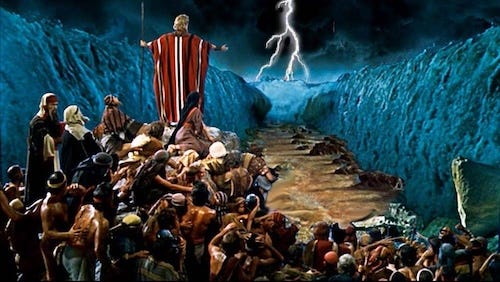
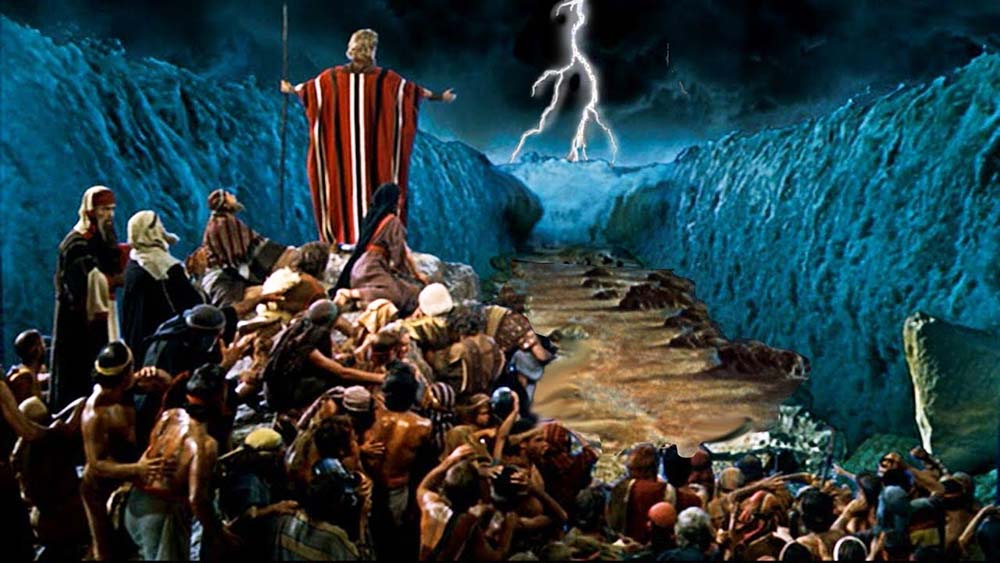
When Moses told the Israelites to “be silent” as they watched the Lord work salvation for them, I think even he was utterly dumbfounded by what happened next. Even still, he lifted up his hands and watched as the God who spoke to him and through him accomplished everything necessary to save him and his people. God controlled the winds, divided the waters, distracted the enemy, turned the muddy riverbed into a sidewalk, clogged all the Egyptian chariots, threw them into a panic, and reversed the course of the water to consume them all in the murky depths.
And what did Israel do?
What did they contribute to this whole affair?
A portion of fear with a dollop of faithlessness.
Despite what Israel did or didn’t bring to the table, God was for them. He was the one who’d be seen as their Savior, and they the ones who needed saving (Exod. 14:30–31). Accordingly, God’s people are learning who they are. They are a people of the Passover and the Exodus and the Red Sea. They are a people who are rescued by Yahweh. “Happy are you, O Israel,” Moses later declares, “a people saved by the Lord” (Deut. 33:29). “Israel had to learn,” Allan M. Harman comments, “that salvation was a work of God, not one the people themselves could perform.”2 And all they had to do was watch and wait as the one who was for them intervened to deliver them.
6. Saved While Standing Still
This is what God continually does for his people, for his church. He meets us in our calamity and confusion, in our times of crisis and doubt, to remind us of his promises, which invite us to keep moving, to keep trusting, even when we don’t see the way ahead. “In the place where the need is sorest,” Alexander Maclaren once said, “and in the form most required, there and that will God ever be to those who trust Him.”3 Walking by faith instead of sight is something you learn when the road dead-ends, when hope fades, and there seems to be no way forward or no way out. In those moments, faith says, I don’t know how, I don’t know when, but I know you will.
Living by faith has never been about what we bring to the table. It has always been, and always will be, about what God does for us when we can’t do anything for ourselves. The gospel of the Red Sea tells us that God’s way of saving his people is the same as it has always been, as he brings us to the end of ourselves so that we might learn who he is and how to walk by faith, not sight. Faith means fearing not, standing firm, being silent, and going forward, knowing that ours is the God who always brings deliverance out of disaster, and life out of death. That’s just who he is. He’s the one who continuously shows himself strong where we are weak, who proves himself trustworthy whenever we are troubled. From the Red Sea to the cross and everywhere in between, the Lord is faithful, even if we are faithless (2 Tim. 2:13).
Michael P. V. Barrett sums it up this way:
Faith is not wishful or positive thinking; it is not an exercise of psyching oneself up in order to navigate some crisis. Biblical faith is objective; its strength is not in its exercise but in its object . . . Faith may not always understand why things happen as they do, but faith settles the heart in the reality of God’s purposes rather than in appearance . . . Faith doesn’t make things happen; it lays hold of and rests on the word of God that must be true regardless of what is happening.4
7. From the Red Sea to the Cross
Just as at the Red Sea, where hope vanished, defeat looked inevitable, as God’s Son was nailed to a tree. There appeared to be no way out and no way forward as he breathed his last and gave up the ghost. And yet, even there, God in Christ was making a way where there was no way. “The crossing of the Red Sea,” Arthur W. Pink once wrote, “speaks of Christ making a way through death for His people.”5 He was passing through the waters of judgment, for you and for me, so that we might pass through to salvation and new life. He went where we could never go, endured what we never could, and fought the war we could never win, surrendering himself to death and bringing life, victory, and eternal redemption out of his resurrection.
Israel’s Red Sea salvation, like the rest of Scripture, forces us to “see the salvation of the Lord, which he works for us” on the cross, where we bring nothing but our need and he does the rest. This is the Word of God that speaks and engenders faith in us. It’s the good news that salvation is received, not achieved. That faith doesn’t make things happen, but rests on what’s been done. And when we feel hemmed in, when all we see tells us there’s no way forward, the Word of the Lord abides forever. He who made a way through the sea is the same God who made a way for sinners to be redeemed and is the same God who makes a way, even now.
My friend Jeffrey Perry has a great article all about this entitled “God Has Spoken,” which I highly recommend to you.
Allan M. Harman, Exodus: God’s Kingdom of Priests, Focus on the Bible Commentary Series (Ross-shire, England: Christian Focus, 2017), 157.
Alexander Maclaren, Expositions of Holy Scripture, Vols. 1–17 (Grand Rapids, MI: Eerdmans, 1944), 1:1.54.
Michael P. V. Barrett, The Gospel of Exodus: Misery, Deliverance, Gratitude (Grand Rapids, MI: Reformation Heritage Books, 2020), 122, 126, 130.
Arthur W. Pink, Gleanings in Exodus (Chicago: Moody Press, 1962), 111.