


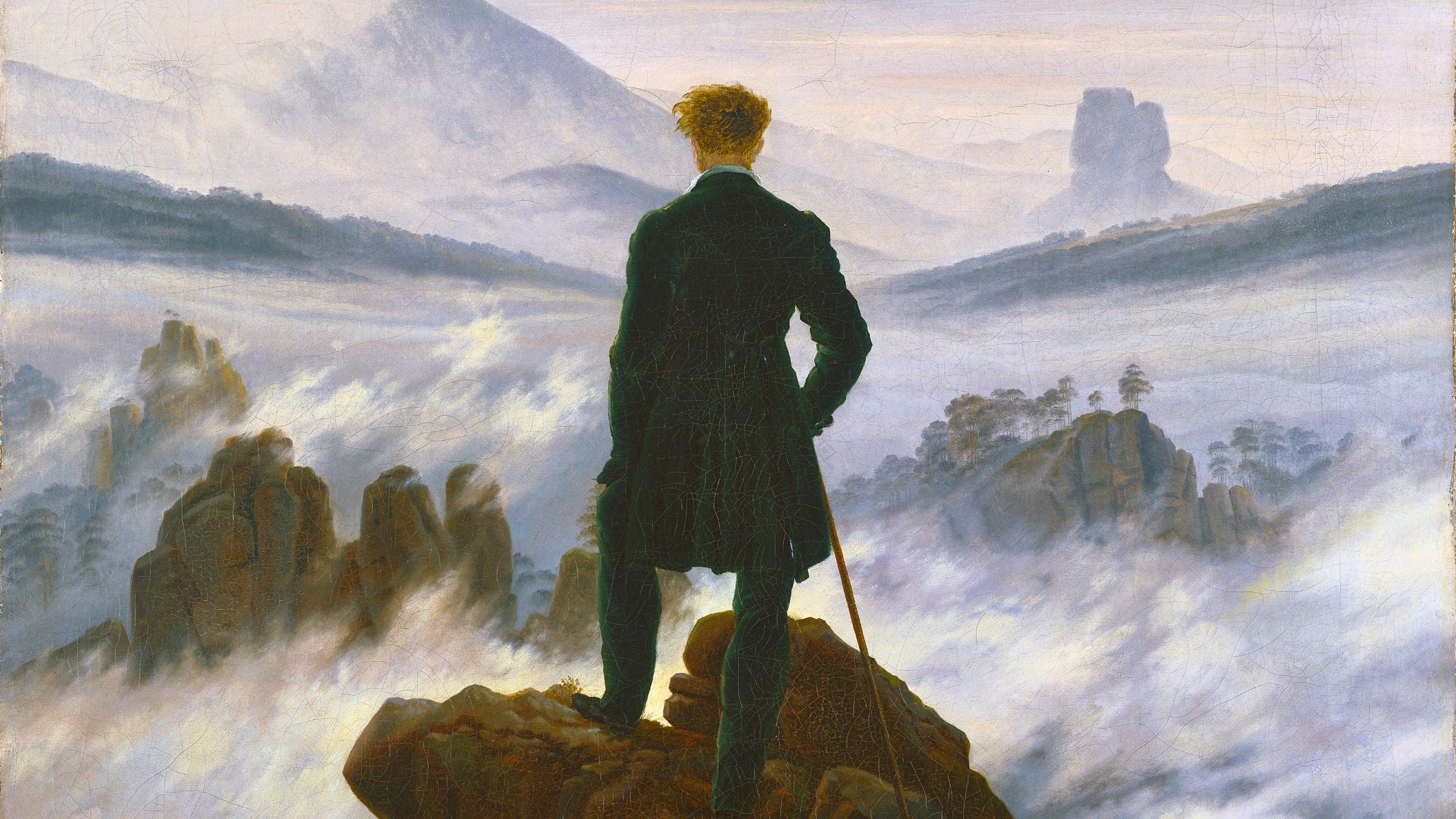

It took me twenty sermons to get to Mount Sinai, which, for the folks in my church, might’ve felt like twenty years. But when you set out to preach through a book like Exodus, a certain measure of resolve is in order, both from the preacher and those who are listening to his preaching. Exodus is a daunting text, brimming with dense amounts of theology and history, despite the majority of it covering roughly only a two-year span. The arrival at Sinai, however, is a seminal moment, both in the story of Scripture and the world. I might add, though, that it was also incredibly paradoxical. Let me explain.

Israel’s voyage to Sinai came with no shortage of bumps and bruises along the way. As Moses recounted to his father-in-law, they had navigated serious hardship, the likes of which none could really fathom (Exod. 18:8). “Through many dangers, toils, and snares,” as the hymnwriter put it, God led his people to the craggy terrain near the southern tip of the peninsula between the two horns of the Red Sea. All along the way, though, the Israelites had a front-row view of God’s faithfulness. And what did that look like? It looked like oceans being split apart, water gushing from rocks, and bread falling from the sky.
As Israel set up camp in the wilderness of Sinai, I suspect none of them expected to be there for the next eleven or so months. In fact, I would wager many of them didn’t expect to be there at all, especially when you consider the old stories concerning Father Abraham and the heavenly promises he received from on high, with which the multitude was likely familiar. The promise in question reads like this:
Now the Lord said to Abram, “Go from your country and your kindred and your father’s house to the land that I will show you. And I will make of you a great nation, and I will bless you and make your name great, so that you will be a blessing. I will bless those who bless you, and him who dishonors you I will curse, and in you all the families of the earth shall be blessed.”
So Abram went, as the Lord had told him, and Lot went with him. Abram was seventy-five years old when he departed from Haran. And Abram took Sarai his wife, and Lot his brother’s son, and all their possessions that they had gathered, and the people that they had acquired in Haran, and they set out to go to the land of Canaan. When they came to the land of Canaan, Abram passed through the land to the place at Shechem, to the oak of Moreh. At that time the Canaanites were in the land. Then the Lord appeared to Abram and said, “To your offspring I will give this land.” So he built there an altar to the Lord, who had appeared to him. (Gen. 12:1–7)

Hovering over story after story and moment after moment in the lives of God’s people was the divine pledge that Abraham’s offspring would be ushered to and made to dwell in a Land of Promise, one that was teeming with life and abundance (Exod. 3:8, 17). With that in mind, and with that promise firmly situated at the heart of Israelite life, I wonder what the masses thought when Moses said, “Well, here we are; we made it,” as they arrived at Sinai.
Pitching your tent in the uninhabited wastelands of Sinai surely felt worse than anticlimactic. The letdown of embracing an age-old promise of landscapes flowing with milk and honey, only to be led into the mountainous terrain of Sinai, is disillusioning at best. I have to imagine it must’ve felt as forlorn as when a certain ring-bearer found himself in the region of Emyn Muil, which Tolkien describes as a “wide tumbled flat of scored and weathered rock, cut every now and again by trench-like gullies that sloped steeply down to deep notches in the cliff-face.”1 Needless to say, this was no oasis.
Establishing a temporary dwelling leagues away from the borders of Canaan undoubtedly inundated the Israelite host with no small amount of confusion, especially since the collective assumption was that Moses was conducting them to the Promised Land. That’s where they were supposed to go, right? That’s what God had promised. Well, yes and no. Yes, according to the Abrahamic promises, but no, according to God’s recent set of instructions to Moses.
Deep in the wilderness of Horeb, a.k.a. Sinai (Exod. 3:1), the former “Prince of Egypt” was greeted by a bush that burned but never burned up. And from within that fiery shrub boomed a voice, the voice of Yahweh, who, among other things, specified that God’s beloved people, the people of promise, would be brought to worship him there, in that precise location. “I will be with you,” the Lord told Moses, “and this shall be the sign for you, that I have sent you: when you have brought the people out of Egypt, you shall serve God on this mountain” (Exod. 3:12).
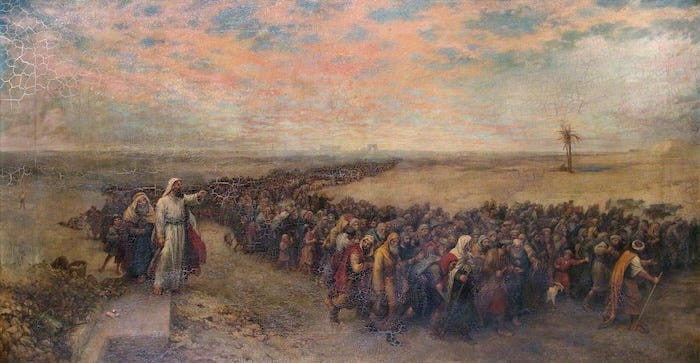
_-_The_Exodus_-_M-1993-1809_-_Museum_of_Croydon.jpg)
Thus, arriving at Sinai might not have been what anyone expected, but even then, God was keeping his promises to them. His word wasn’t returning void. It never has. “According to the divine word in 3:12,” J. Alec Motyer comments, “Sinai was no accident brought about by misunderstanding or an adaptation of the Lord’s plans to meet an unforeseen problem, nor was it a transient campsite like Elim or Rephidim. Sinai was in fact the primary destination of the journey from Egypt, the Lord’s stated target.”2
It may have felt meandering, from Israel’s point of view, but God was never lost, nor was he taking them on a detour. Rather, he was leading them right to the exact spot where he would covenant with them and make them his people, the apple of his eye (Zech. 2:8). In other words, they weren’t where they hoped to be, or even longed to be, but they were right where God wanted them to be. This is a good reminder that the oft-quoted truth that “all things work together for good, for those who are called” doesn’t also mean things working out in the way we’d anticipate (Rom. 8:28). Sometimes, the opposite happens, or at the very least, something quite different, and usually, that’s for the better.
I won’t prognosticate what that is or what that might look like for you. I’m no diviner, nor am I that presumptuous. However, what I can say is that following the Lord’s leading does lead to good ends and greener pastures, one way or another. After all, the one who shepherded his people through the wilderness has never once been thrown off course. Not even a cross could do that.
Grace and peace.
J. R. R. Tolkien, The Two Towers: Being the First Part of The Lord of the Rings (Boston: Houghton Mifflin, 1965), 211.
J. Alec Motyer, The Message of Exodus: The Days of Our Pilgrimage, Revised Edition, The Bible Speaks Today (Downers Grove, IL: InterVarsity Press, 2021), 182.
Just moved at age 65 to new state with husband and 20 yr old "special" daughter. Trying to see, hear and walk with Him through His ways