



The words “apocalypse” or “apocalyptic” certainly have a distinct connotation for most Westerners. More often than not, both terms are closely associated with dystopian films such as The Road, The Book of Eli, The Day After Tomorrow, and the like. Hollywood director Roland Emmerich, the so-called “master of disaster,” has effectively made an entire career out of putting humanity’s reckoning on the silver screen in all of its disastrous glory. Incidentally, this same undercurrent of catastrophe has become the paradigm by which interpreters explain the apocalyptic literature of Scripture. St. John’s Revelation, in particular, has received its fair share of doomsday expositions, so much so that I’d wager that the aggregate understanding of the biblical finale is on par with the cataclysm depicted in the aforementioned Emmerich’s 2012. As ubiquitous as this assumption may be, it is far removed from the biblical concept of apocalypse.
Properly speaking, scriptural apokalupsis involves the disclosure of things that were before unknown. In the case of the apostle John, this has little to do with “his revelation” and more to do with the revelation of the Christ of God. As is manifest in the very first verse, “The revelation of Jesus Christ, which God gave him to show to his servants the things that must soon take place” (Rev. 1:1). What was before unknown concerning the ultimate unfolding history was, therefore, made known to the apostle whom Jesus loved, and, in so doing, his heart and the heart of all those in “the seven churches that are in Asia” (Rev. 1:4) might be comforted by the apocalypse of Christ’s sovereignty, majesty, and might. Indeed, what is so misunderstood about the Book of Revelation is that its raison d’être is not prediction or consternation but blessing and consolation (Rev. 1:3).
The point is that most, if not all, of Scripture is inherently apocalyptic to one degree or another. Both the Old and New Testaments are recorded so that page after page unfolds and reveals more and more of God’s preternatural redemptive purpose. This is what the retired Orthodox priest Stephen Freeman attests in his article “The Apocalypse of Christmas,” where he writes, “The whole of the gospel is ‘apocalyptic.’ It is something which, though once hidden from the world, is now revealed and made known.” In fact, as Father Freeman proceeds to say, the church’s most cherished holiday is itself “an apocalyptic event.” But instead of being an apocalypse of disaster, it is the apocalypse of mankind’s deliverance. Here’s how Father Freeman puts it:
Christmas is an apocalyptic event. It happens in “hiding.” Word leaks out and the wicked king, Herod, goes on the warpath. Through the silent means of a star, wise men from Persia make their way to Bethlehem, inadvertently alerting the wicked king. The mystery, however, is so well hidden that St. Paul tells us that the “princes of this world” (demonic forces) did not really understand what they were doing when they crucified the Lord of Glory (1 Cor. 2:8).
We take the Christmas story for granted, reducing this great mystery to a card with well wishes. What was taking place, however, was truly “apocalyptic.” In that moment (or in the moment of the Annunciation nine months earlier), the world was turned inside out. The Lord of Glory, the Logos of God, the very meaning of the universe itself, entered our history and became a “historical figure.” The Godhead was now “veiled in flesh.” Simple shepherds kept watch with the very angels of heaven. Bethlehem (the “house of bread”) became the place where the Bread of Life Himself was first seen. In Him, all of the world would be fed — our true hunger banished.
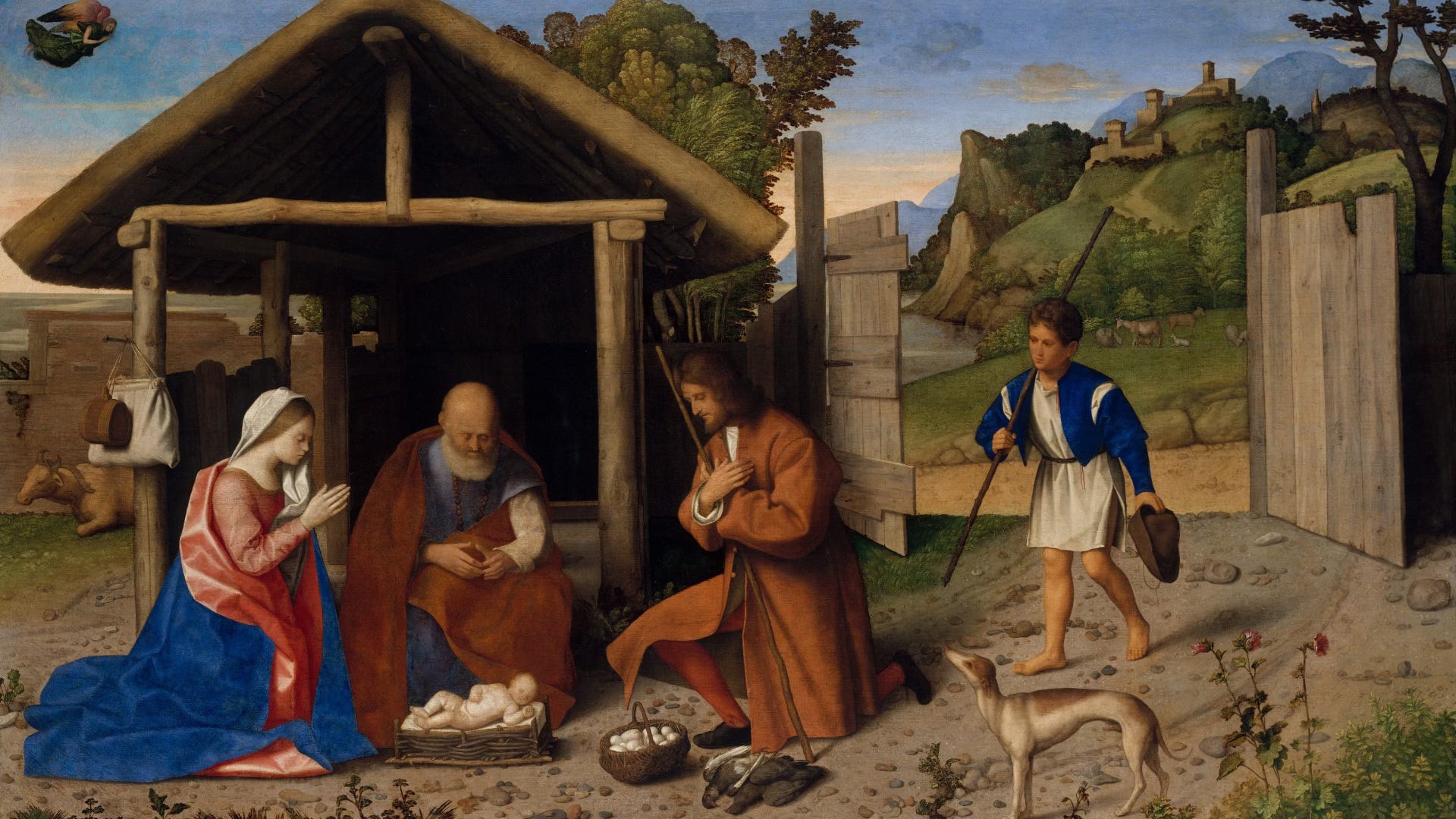
Although the image of baby Jesus in a feeding trough for a crib doesn’t strike us as “apocalyptic,” it is indeed the corporeal self-disclosure of God with us. What we celebrate at Christmas is nothing less than “the fullness of God,” dwelling and becoming incarnate in a newborn (Col. 1:19). The glad tidings of Christmas, therefore, are concerned with nothing less than the announcement of the Savior’s arrival into time and space. “What has been hidden from the ages,” Father Freeman continues, “and is made manifest in the birth of the Christ Child, is the entry into our world of the Kingdom of God. It is the birth of our salvation. The true Apocalypse is good news.”
Grace, peace, and Merry Christmas to you.