


It goes without saying that the church is an institution or organism that is founded on the shared conviction that Jesus of Nazareth rose from the dead after having been crucified just outside the gates of Jerusalem. This confession is, essentially, what it means to be Christian, which is the argument Paul makes throughout 1 Corinthians 15. The ekklēsia gathers because its constituents believe the tomb where Jesus was laid is actually empty. And although tradition says to set aside time every year to commemorate this event during Easter, in reality, every assembly of the church is an imprimatur that the resurrection is true. If this isn’t the case, then “we are of all people most to be pitied” (1 Cor. 15:19).
1. If Easter Isn’t True, Nothing Is
What makes Paul’s logic so astonishing is that he readily admits the lunacy of the church if Easter is a lie. If Jesus didn’t, in fact, stroll out of the grave on Sunday, then the church’s faith is absolutely “futile,” worthless, and empty (1 Cor. 15:17). Christianity, then, is little more than a cult, rallying around a trumped-up superstition of its Founder’s ability to come back from the dead. Funnily enough, this is precisely how Christ’s disciples were regarded early on, as those who followed his teachings were lumped together as those of “The Way,” which was a pejorative term for the church (Acts 9:2; 19:9, 23; 22:4; 24:14).
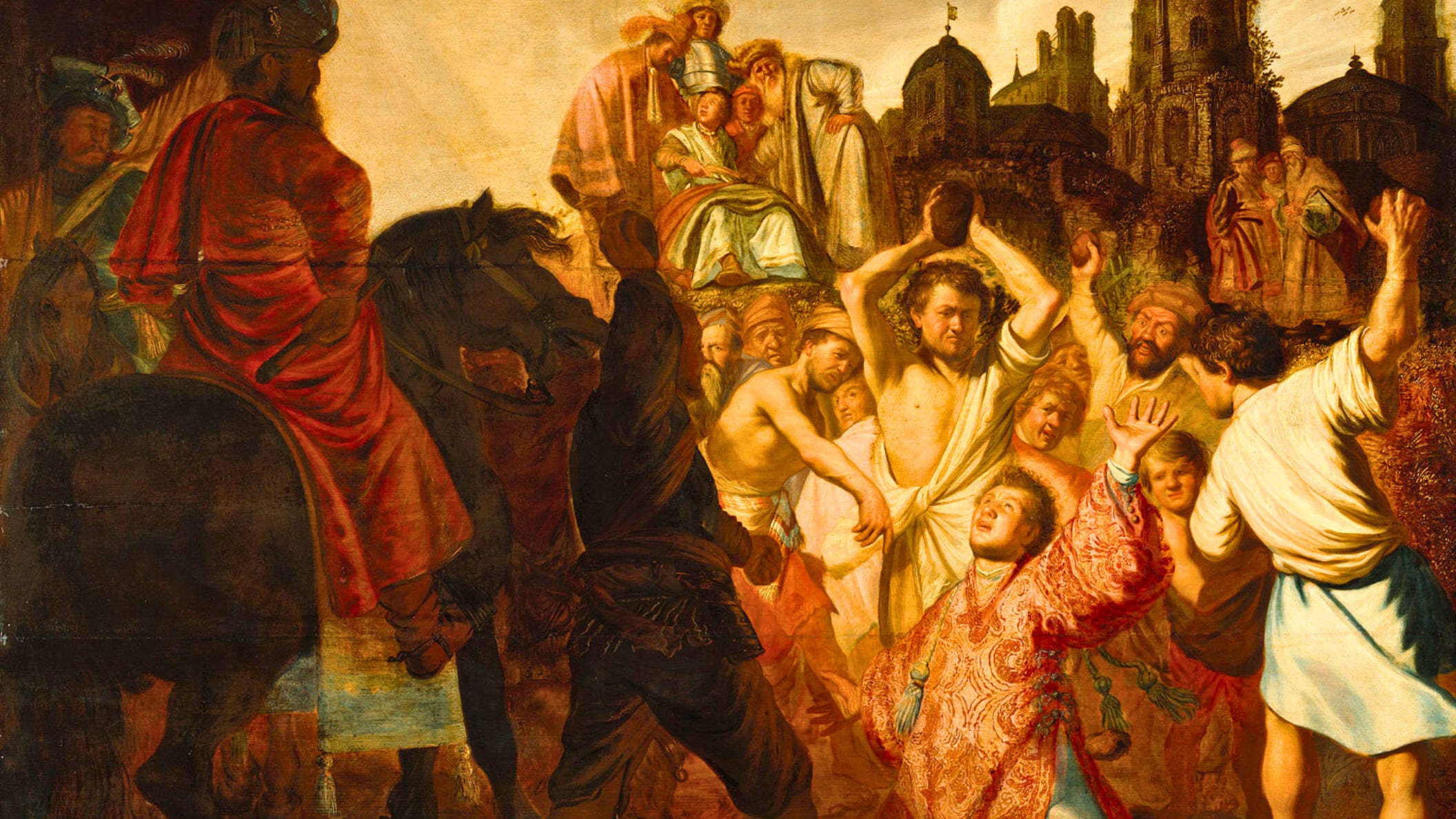
Members of The Way weren’t taken very seriously. After all, you belonged to a religious sect of superstitious fanatics who constantly carried on about how a Teacher from Galilee was actually the Son of God. Such prejudice is brought into the foreground throughout the trial of Stephen, where a religious gentry fabricates charges and extorts witnesses to secure a guilty verdict (Acts 6:11–14). Similarly, even though many modern philosophers would affirm the historicity of Jesus of Nazareth, the notion of his resurrection still remains something of “an idle tale” (Luke 24:9–11), perhaps because of what it’d mean if Easter were true.
2. Stephen’s Sermon and the Sanhedrin’s Rage
Stephen’s testimony serves as a sweeping overview of the history of the people of Israel (Acts 7:2–53). From Abraham to Joseph to Moses to the giving of the Ten Commandments, he briefly surveys some of the key moments in Israelite lore in a masterful sermon that traces God’s story of grace throughout the ages. What makes this discourse so intriguing is its audience. “The council” referred to is none other than the Sanhedrin, the highest Jewish court of authority in those days, presiding over legal, political, and religious matters under Rome’s oversight. In other words, they were quite familiar with the content of Stephen’s message.
Being forced to listen to a deacon blather on about the A-B-C’s of Jewish history would’ve been nothing short of insulting to a group of so-called “religious elites.” What’s more, though, these were the same decision-makers who put Stephen’s Lord to death just a few years prior. This council was comprised of the same bunch who conspired to rid themselves of any shred of evidence that pointed back to Jesus — a point that makes Stephen’s last few remarks a legitimate mic drop:
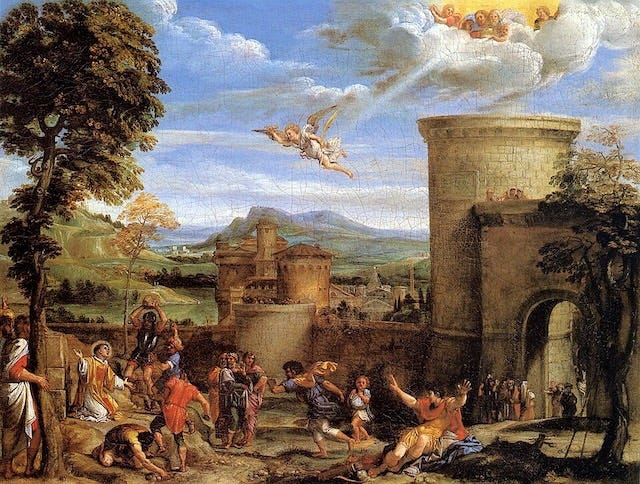
“You stiff-necked people, uncircumcised in heart and ears, you always resist the Holy Spirit. As your fathers did, so do you. Which of the prophets did your fathers not persecute? And they killed those who announced beforehand the coming of the Righteous One, whom you have now betrayed and murdered, you who received the law as delivered by angels and did not keep it.” Now when they heard these things they were enraged, and they ground their teeth at him. But he, full of the Holy Spirit, gazed into heaven and saw the glory of God, and Jesus standing at the right hand of God. And he said, “Behold, I see the heavens opened, and the Son of Man standing at the right hand of God.” But they cried out with a loud voice and stopped their ears and rushed together at him. (Acts 7:51–57)

On top of insulting their intelligence and calling them a bunch of stiff-necked heathens, Stephen takes it one step further by invoking Jesus’s designation, “the Son of Man,” a title that was teeming with significance for every devout Jew, but especially this council. Why? Because it was this very title that Jesus invoked that pushed them over the edge (Mark 14:55–64; cf. Matt. 26:64; Luke 22:69). Standing before a board of elders who held his life in their hands (or so they thought), Jesus pulled the curtain back on his true identity as the Messiah, the Christ of God. In so doing, a din of blasphemy deafened the room, so much so that the Sanhedrin had Jesus flogged and crucified.
Stephen, similarly, testifies before the same council, who also held his life in their hands, that the one they crucified for blasphemy was, in fact, telling the truth (Acts 7:52). “I see the heavens opened,” he confesses, as the nobles grind their teeth at him, “and the Son of Man standing at the right hand of God” (Acts 7:56). What the Sanhedrin thought they successfully covered up hadn’t worked after all, since according to the first victim of The Way, the Son of Man was very much alive. Even after rejecting Judas’s blood money and depositing a hefty sum of hush money in the accounts of those who were supposed to guard the tomb, they were powerless to stop the good news of Jesus’s resurrection from spreading.
Perhaps this is because the Lord’s rising from the dead was no mere rumor that could be swiftly stifled. No amount of bribes or halfheartedly concocted stories could ever make this truth go away. This is the truth that changes the world, and still does today, so much so that Stephen boldly declares, “Even now, I see him, the one you rejected and murdered. The Son of Man has risen, and even now, he rules from heaven’s throne!”
And just as it did with Jesus, this is what pushes the council over the edge (Acts 7:57–58), as they resort to stopping their ears like a bunch of toddlers and stampeding Stephen like a herd of wildebeasts. They rush him and stone him, leaving his emaciated corpse to rot in the Jewish sun. But this sudden moment of violence wasn’t just because Stephen was opening the proverbial closet where all their skeletons were hidden, nor was it just because he was blowing the lid off a secret they thought was good and buried. Rather, it was because this testimony meant that all the authority in heaven and earth belonged to the one they crucified.
3. The Son of Man Still Reigns
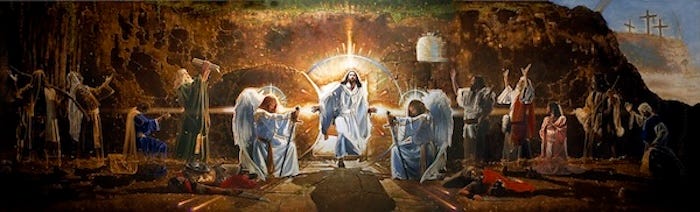
“The Son of Man” is an Old Testament epithet that appears most prominently in Daniel’s prophecy (Dan. 7:13–14). With Jesus of Nazareth assuming this role and title, he, likewise, espouses the everlasting dominion and glorious kingdom that go along with it. And, of course, Jesus didn’t just claim this — he proved it to be true by walking out of the grave. Not even death itself can rob Christ of his authority (Acts 2:24; Matt. 28:18).
This is what continues to ruffle everyone’s feathers, even now. After all, if he’s the Authority, that means we aren’t. And nothing gets folks riled up quite like telling them that they are not the ones in charge. This is a sentiment that incites teeth grinding and runs counter to the mantra of modernity, which insists that we are the masters of our fate. Despite its prevalence, that maxim is categorically false. We are the masters of nothing. Everything we are and have is a gift. We don’t even have authority over ourselves (1 Cor. 6:19–20). But as we bow in humility and faith to the authority of the Risen One, that’s when we become what he intended us to be.
4. The Posture of the Risen Christ
There are myriad reasons why Stephen’s courtroom vision continues to enthrall us, not the least of which is Jesus’s posture. “But he,” we are told, “full of the Holy Spirit, gazed into heaven and saw the glory of God, and Jesus standing at the right hand of God. And he said, ‘Behold, I see the heavens opened, and the Son of Man standing at the right hand of God’” (Acts 7:55–56). It’s no accident that St. Luke includes the detail that Jesus was standing. And the reason this is so important is that the primary biblical image of the ascended Lord sees him sitting:
“You will see,” Jesus declares, “the Son of Man seated at the right hand of Power” (Mark 14:62).
“After making purification for sins, he [Jesus] sat down at the right hand of the Majesty on high” (Heb. 1:3).
“But when Christ had offered for all time a single sacrifice for sins, he sat down at the right hand of God” (Heb. 10:12).
So, which is it? Is he seated or is he standing? What does this mean? And does it matter? The answer is yes, Jesus is both sitting down and standing “at the right hand of God.” He sits because the work to cancel all your sins is done. He sits because it’s finished. Unlike the priests of old, who never sat because their work was never over, the Great High Priest of our faith takes a seat since nothing more needs doing for you to be forgiven. Jesus paid it all and did it all for you on the cross.
At the same time, though, he stands because we are in desperate need of representation. We need someone to stand for us, to stand in our place and on our behalf. This is who Jesus is for us: he’s our advocate. In the courtroom of heaven, the risen Lord stands, intercedes, and pleads for the likes of you and me — a role he embraces for the rest of time (Heb. 7:25; Rom. 8:34). Far from being a court-appointed attorney who begrudgingly takes your case, Jesus stands before the bar and delights to speak on your behalf, silencing every accusation by showing the whole gallery of heaven his hands and side.
Therefore, not if, but when we sin, Easter’s good news tells us that we have “an advocate with the Father, Jesus Christ the righteous” (1 John 2:1; cf. Zech. 3:1-5). Our advocate is none other than the Lamb of God “standing as though it had been slain” (Rev. 5:6), forever gesturing to the wounds that cover all our sins.
To believe in the resurrection also means to believe that we can’t save ourselves. Much like submitting to authority, human beings don’t like being told they can’t do something, especially when it comes to where they’ll spend eternity. But what at first sounds like bad news — “you can’t save yourself” — is actually the best news ever, because salvation is Christ’s work from start to finish. He’s the one who saved you, and he’s the one who keeps you saved. The resurrection is God’s stamp of approval that redemption has been accomplished, that it really is finished. Not by you or me, but by the Crucified One who is also the Risen One, who stands forever in your place.
5. Seen and Unseen Testimony
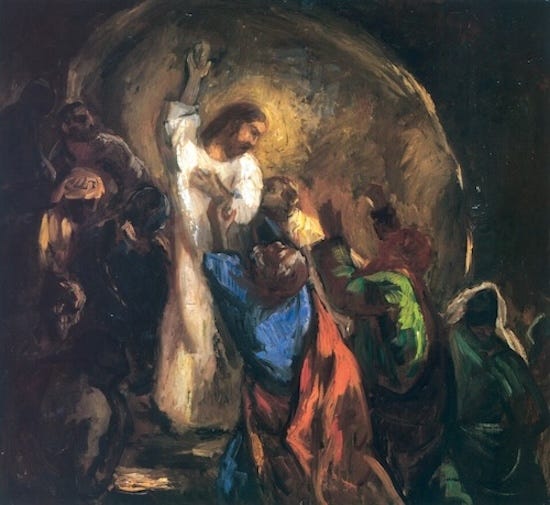

The vision of Stephen is one of the most astounding events in the early days of the New Testament church, not only because it precedes his death, but also because it confirms every word that the church preached. Both because of eye-witness testimony and because of the testimony of the Holy Spirit, the church was born out of the confession that Jesus Christ rose from the dead on the third day (1 Cor. 15:3–4). Paul recalls that the number of those who saw the resurrected Lord was over five hundred, many of whom were still alive when he authored his first epistle to the Corinthians (1 Cor. 15:6). Put differently, the early days of the church were shaped by the words of those who were there (1 John 1:1).
But what about when all those eyewitnesses weren’t around anymore? What then? How could the church be sure that its gospel is true if those who were there are dead and gone? Well, because the gospel of Jesus was never just about eyewitness testimony. As Jesus himself tells Thomas, “Blessed are those who have not seen and yet have believed” (John 20:29). Still, how can future generations of believers be so sure that the resurrection was true? Praying for “visions” is the wrong answer. This isn’t to say that God cannot or does not still work through visions — I have no doubt that he can — but that certainly isn’t the norm, nor was that even happening all the time in the apostolic era. No, the church needs something more constant than that, which is precisely what the church has in the gift of the Holy Spirit.
The Holy Spirit is the key to understanding the scene of Stephen’s execution. After all, it was because of the Holy Spirit that Stephen was chosen to be a deacon in the first place (Acts 6:5). It was because of the Holy Spirit that Stephen spoke with such grace and certainty (Acts 6:10). It was because of the Holy Spirit that the Sanhedrin was so flummoxed by his words (Acts 7:51). And it was because of the Holy Spirit that he was given a glimpse into heaven (Acts 7:55). Although we don’t know much about Stephen, apart from what’s recorded by Luke, we do know that he was “full of the Holy Spirit,” and that’s all that matters.
6. Christ Still Speaks
This corresponds to what Jesus promised his followers shortly before he was crucified. “When the Helper comes,” says the Lord, “whom I will send to you from the Father, the Spirit of truth . . . he will bear witness about me” (John 15:26). Accordingly, believing in the resurrection isn’t a matter of “You just had to be there.” Rather, it is and always will be a matter of Christ’s Spirit bearing witness in our hearts and souls to the fact of Christ’s resurrection, which is what the Spirit does through the Word. In so doing, the Spirit opens up the heavens and presses the truth of the Word ever deeper into us. This is why the Holy Spirit was poured out on the day of Pentecost (Acts 2) and why we can be sure that Easter is true, even though we weren’t there.
Thus, in a way, what Stephen saw that afternoon is what happens every Sunday whenever God’s Word is opened and preached. The sight of heaven opening wasn’t just for Stephen’s sake, because the heavens are still open since God opened them. It’s not an accident that the term “opened” also appears twice in Luke’s account of Jesus’s resurrection (Acts 7:56; cf. Luke 24:31, 45). God in Christ tore open the heavens and came down to rescue you (Ps. 18:9). And through God’s Word and Spirit, God continues to make himself, along with the power that raises the dead, known to us.