


A version of this post has also appeared on 1517.
What do you get when you take the comedic sensibilities of The Office and mix them with the biblical trappings of The Chosen? Well, you get something like The Promised Land, a mockumentary comedy series following God’s chosen people during the immediate aftermath of the Exodus. While at first the Old Testament might not seem to provide much in the way of comedic material, writer/director Mitch Hudson and producer Richie Johns demonstrate a keen eye for mining the humanity hidden within all the decrees, laws, and grisly narratives of post-Egyptian biblical history, which means humorous shenanigans aren’t too far behind. All those stories, many of which we know by heart — from the plagues to the Red Sea to the golden calf — aren’t merely flannel-graph cartoons relegated to Sunday school curricula. Nor are they merely fodder for educating youngsters on the scruples of biblical morality. Rather, they’re real events that happened to real people who were navigating real problems.
I’m not sure what rubric undergirds “The Turing Test,” what questions you’re supposed to ask, but all you need to judge whether or not your counterpart is human or artificial is an evaluation of the comedic timing and sense of humor on the other end. Humans are funny beings; this is universally true. This isn’t a feature of evolution; this has been the case since the dawn of time. It can be said that grace is the thread that holds life together, but inherent in the gift of grace is the gift of laughter and finding the humor in what is otherwise mundane, befuddling, or grim. “Most of life is absurd,” Joel J Miller once said. “It makes more sense when we recognize that. It also makes it considerably more humorous.” This, in many ways, is the essential premise of The Promised Land and the quirky lens through which it aims to convey the story of the Bible. Without slipping into corny parody or even blasphemous mockery, The Promised Land manages to capture Scripture’s humanity, with all its flaws, frustrations, and surprises, and the God who works in, with, and through every bit of it.
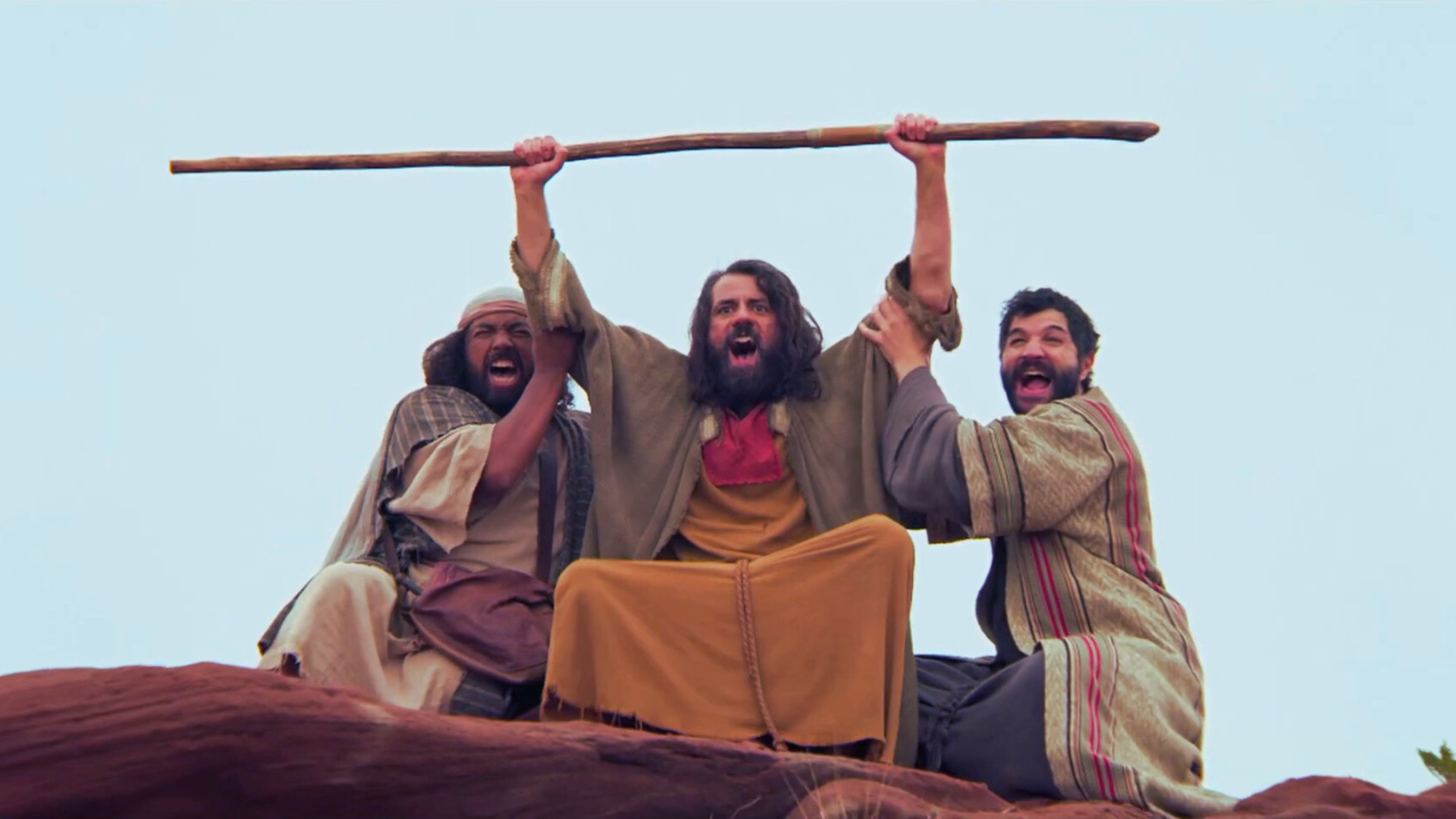
Debuting its six-episode first season on YouTube, The Promised Land opens with a talking-head interview of Aaron reflecting on the events of the Red Sea crossing while the rest of Israel skirmishes the Amalekites, with their hope of victory being tied to Moses’s arm strength (Exod. 17:11). The unintentional humor of this scenario, as Israel’s “vigorous leader” does his part by holding his staff aloft, brings a smile to my face. The same is true in a later scene when Moses shares a word from the Lord, reminding the people how God bore them on eagles’ wings to bring them to himself (Exod. 19:4), only for someone to shout from the back, “I don’t remember any eagles!” What’s clear, right from the start, is that this isn’t a self-serious Charlton Heston iteration of Moses, nor is it a Christian Bale action hero version. This Moses is anxious and overwhelmed, wondering why in the world God put him in charge of so many ungrateful people.
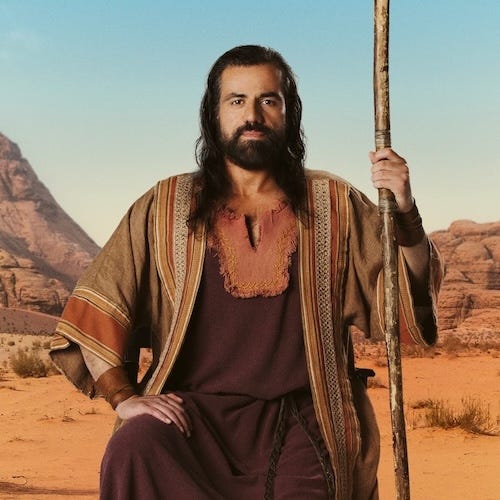
Moses’s struggles with his calling and the mass of people put under his charge are well-documented (cf. Num. 11:10–15). The Promised Land invites us to laugh at how relatable it is to be exhausted and exasperated by all the people, and the egos and opinions they bring with them, that come with living. As Moses juggles his newfound role as the shepherd of the people of God, and Aaron finds his place, and Joshua learns when and when not to try so hard, we’re shown an absurdly real view of biblical life. Suddenly, Moses’s knee-jerk reactions don’t feel so foreign. The point is that discerning the humor in God’s inspired Word doesn’t equate to undermining its authority or its weightiness. Rather, it shines a beaming spotlight on the kind of people God uses to accomplish his purposes — ones who are faithful yet flawed; who fail and get frustrated, even while they learn to trust in a God whose words and ways seem absurd.
There are moments of genuine pathos sprinkled throughout the show, too, striking a neat, albeit uneven, balance between all the comedy with a few touching moments that seem to come out of nowhere. Season 1’s main threads are quite literally a family affair revolving around Moses and his siblings, Aaron and Miriam, both of whom are coming to grips with Moses’s new role and how they fit in, all while Moses comes to grips with the fact that he can’t carry the load of leadership on his own, nor was he meant to. The infamous golden calf fiasco weaves these threads together into an absurdly chaotic diorama that paves the way for the show’s finale, where Moses finally learns to trust those around him, Aaron finally steps up, and Miriam finally finds her place, with the rest of the Israelite community trudging forward through the wilderness. It’s funny, honest, and real. This is the genius of comedy, though — an art form that dares to address the unpleasant and uncomfortable by removing the threat by laughing in the face of it.
Amid all the messiness, challenges, and ridiculous circumstances of life in the wilderness, The Promised Land reminds us not to take ourselves or our situations too seriously. Despite what some pastors and ministry leaders may have led you to believe, there is quite a bit of humor coursing through the pages of Scripture. We’ve forgotten that somehow, and instead have become absorbed in understanding righteousness as quasi-stoicism. Doctrine is decidedly unfunny, and the church isn’t a place to laugh. Life is best lived when you’re not joking around all the time. Such is the implicit logic that spills out of pulpits and into the ears, minds, and hearts of far too many churchgoers. But a life without laughter is one with little recognition of the grace that makes it possible. The absurdity of God’s deliverance and ensuing instruction reminds us that his grace isn’t always dignified. If The Promised Land shows us anything, it’s that laughing our way through God’s story might just be the key to seeing it more clearly.
As a huge Office fan, I have really enjoyed the series