


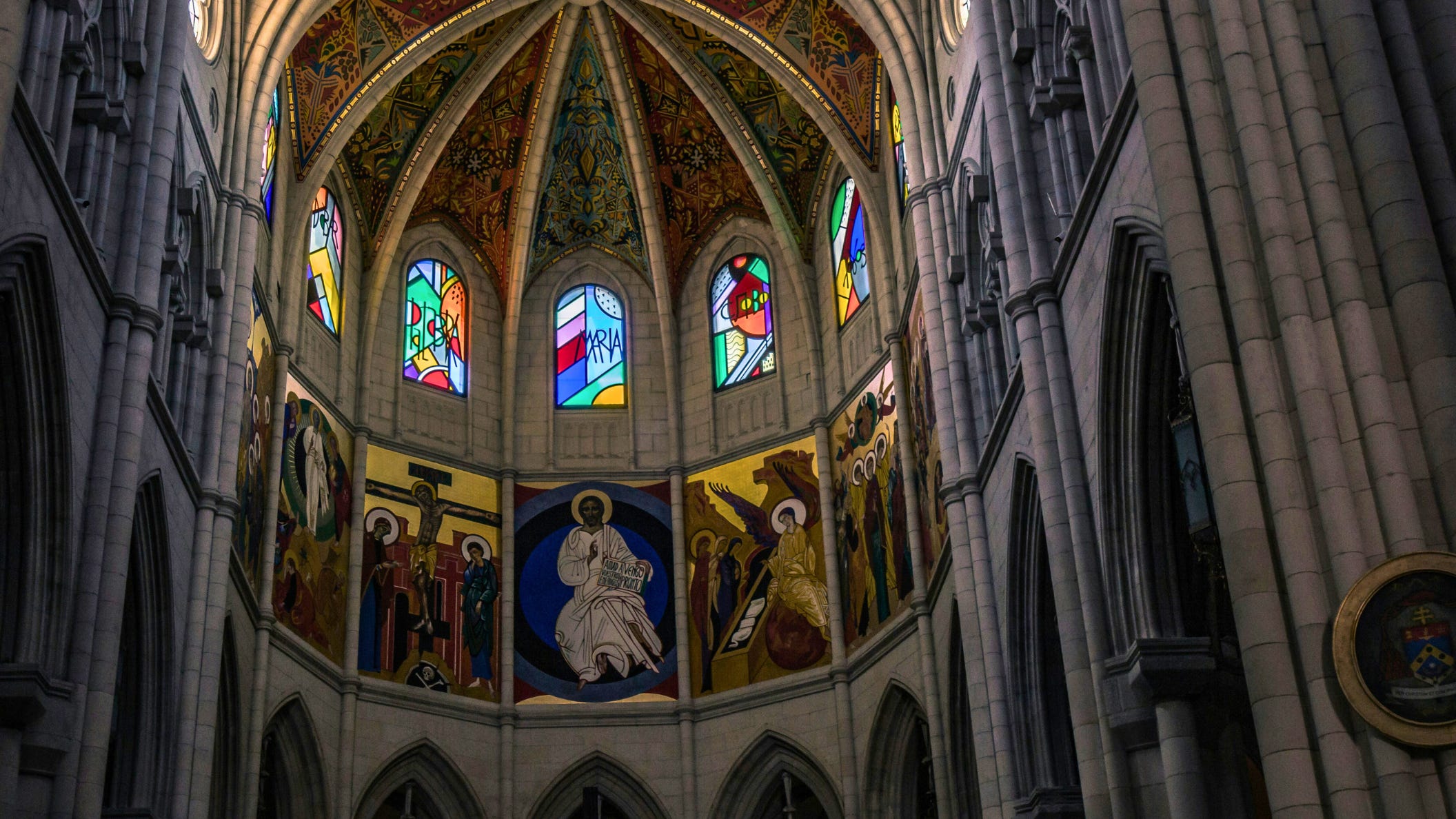
A few weeks ago, I shared some thrilling news regarding a new book contract between yours truly and 1517 Publishing. Having worked with them on my first writing project back in 2023, it made sense to work with them again, especially considering the scope and subject matter. I’m not going to quiz you, but if you were paying attention to the forest of themes I’ve been writing about recently, and not just individual trees, then you likely already have a solid inclination about where this is going. But for those of you who haven’t picked up on it yet, I figured I’d try to whet your appetites a bit, while also sharing a few accompanying words from Stephen Freeman.
There are words that are bubbling over in this brain of mine, which is usually a good indication that there’s something I have to get out, either through speaking or writing. I’ve found myself bitten by the writing bug the last few months, with ideas and thoughts being furiously tapped out on my phone while I’m trying to go to sleep, which doesn’t always result in the most coherent notes. After a few minutes of deciphering, I can usually remember what I was going for. But I’m convinced that the most important and influential theological paradigm one can affirm is Martin Luther’s theologia crucis et theologia gloriae, that is, “the theology of the cross” and its antithesis, “the theology of glory.”
If you’ve read this little newsletter for any length of time, especially the last year, though, you might’ve noticed the frequency with which this paradigm has popped up. (Some good specimens can be found here, here, here, and here.) That’s because, as I’ve come to discern, this paradigmatic theological breakthrough, as articulated by Luther in his Heidelberg Disputation in 1518 (with traces found even earlier than that in his comments on the Psalms), though not originated by him, is teeming with seismic ecclesiological, hermeneutical, homiletical, doxological, and epistemological potentiality. In other words, your theology of the cross really does reshape the Christian life as you know it.
And I don’t say that just as one whose historical and theological biases often tend toward Reformation-age developments. Although, to be sure, there are immense ripple effects that emerged from that era with which the church is still grappling, affording scribes and scholars loads of fodder for think pieces, essays, arguments, and counter-arguments galore. Nonetheless, it goes without saying that the cross endures as the ultimate touchstone of the Christian faith, and for good reason. As liturgies and traditions across the spectrum of orthodox denominations adorn their sanctuaries with cruciform paraphernalia, they do so in hopes of reminding themselves and others of the locus of Christian hope.
But what does it mean that we are those who belong, by faith, to a crucified Messiah? Have you ever really thought about that? At the risk of being anecdotal, I fear the cross of Christ is only ever regarded in salvific or symbolic terms. The cross has become a marketable image, hanging from necklaces and keychains or serving as the centerpiece for screen-printed T-shirts and tattoos. As the pendant of Christian faith, the cross bespeaks the way in which miscreants and mizers belong to Jesus. But what if the cross’s resonance isn’t merely salvific? What if it preaches something more to us than just the way in which sinners are saved?
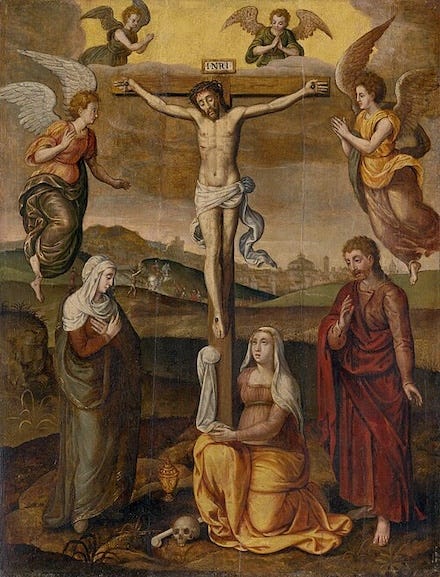

These questions are at the heart of the theology of the cross. By positing the crucis-gloriae paradigm, Luther understood the cross not only as a vehicle for redemption but also as a revelatory window into the heart of God himself. The cross, in other words, is where God makes himself known. Thus, it must mean something that the church owes its existence to a Crucified God. The irony isn’t lost on me with what I’m about to share, since Stephen Freeman, a retired priest of the Orthodox Church in America, articulates this so well:
The Cross is a symbol of shame, weakness, and defeat. Crucifixion was the common means of execution reserved for slaves (primarily). Its humiliation was so great that it was forbidden to be used against a citizen of Rome. Whenever we invoke the Cross, we are proclaiming that we have allied ourselves with the way of the Cross, and specifically with Jesus Christ, the God/Man, who demonstrated for all time that the Cross is the way of love and the fullness of the revelation of God. The resurrection of Christ vindicates the Cross and Christ’s self-emptying (Phil. 2:5–10).
Don’t worry, yes, I feel your side-eyes, as a Baptist has just invoked an Orthodox priest to make a very Lutheran point. But this is why theology is fun. And also, it wasn’t just a German Augustinian monk who held fast to the theology of the cross versus the theology of glory as a guiding epistemological framework for the church. The apostle Paul, likewise, understood the word of the cross as that which decimates human wisdom, not only because of what it preaches but because of who was nailed to it (1 Cor. 1:18–31). No less than the Christ of God, he who is the Word-Made-Flesh. Freeman, again:
The victory of Christ, of the Word-Made-Flesh, is also a victory for the groaning creation itself (Rom. 8:19–22). The Cross is not mere wood, a mute recipient of the writhing agony of God. The Church’s veneration of the Cross and its treatment in prayers and hymnody expand a very Biblical model in which the “mountains and hills . . . break forth into singing, and all the trees of the field shall clap their hands” (Isa. 55:12).
Christian hope is always downstream of, and never untethered from, the cross. Indeed, the Word of God is the word of the cross. Every bit of the Christian life finds its convergence and emergence from the Place of the Skull, where the King of Glory was reprehensibly murdered as a common criminal. The theologia crucis et theologia gloriae project aims to keep this at the forefront of all theological development and expression. We are disciples of the Crucified One, which, of course, should (and does) affect the way we approach the study and propagation of Scripture, the communion of the saints, and the life of the Body of Christ in the world.
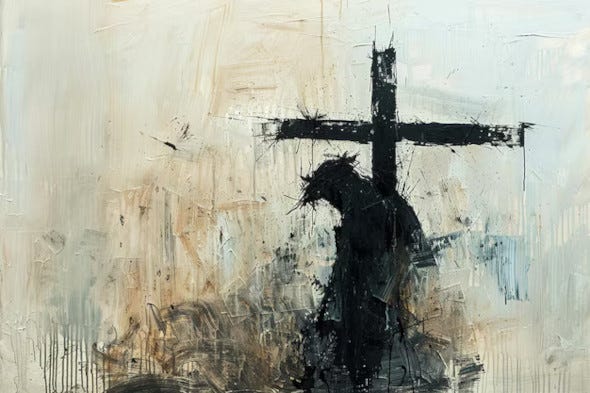
All of that to say, my writing project with 1517 will, Lord willing, aim to unpack theologia crucis in the least academic way possible. Not that I don’t enjoy reading academic papers or scholarly journals. However, much, if not all, of the research I’ve done has returned nothing but heady, exhaustive treatments of Luther’s paradigm and its sprawling consequences. My aspirations are less cerebral and more experiential, especially in the life of the church. Indeed, having been raised in and around the church for my entire life, what with being the son and grandson of pastors, I can confidently say that, by and large, churches function within a theology of glory despite having the cross all over their facilities.
Put another way, what the church is desperate to recover is the abiding and conscious realization that the Lord who hung on a cross is none other than the Word through whom galaxies were brought into existence, chrysanthemums were created, and platypuses (platypi?) were hilariously called into being. It means something — indeed, it means everything that he who is both Lord and Christ, the Author and Finisher of our faith, shows the world who he most truly is as he’s gasping, heaving, and bleeding. The cross is not only the site of salvation for sinners like you and me; it’s also the apex of the revelation of God in the person of Jesus. As such, it’s the place from which the church preaches, hopes, and lives.
Grace and peace to you, my friends.
Great news! I will be sharing it with others... We will be eager, with waiting! Thank you.