


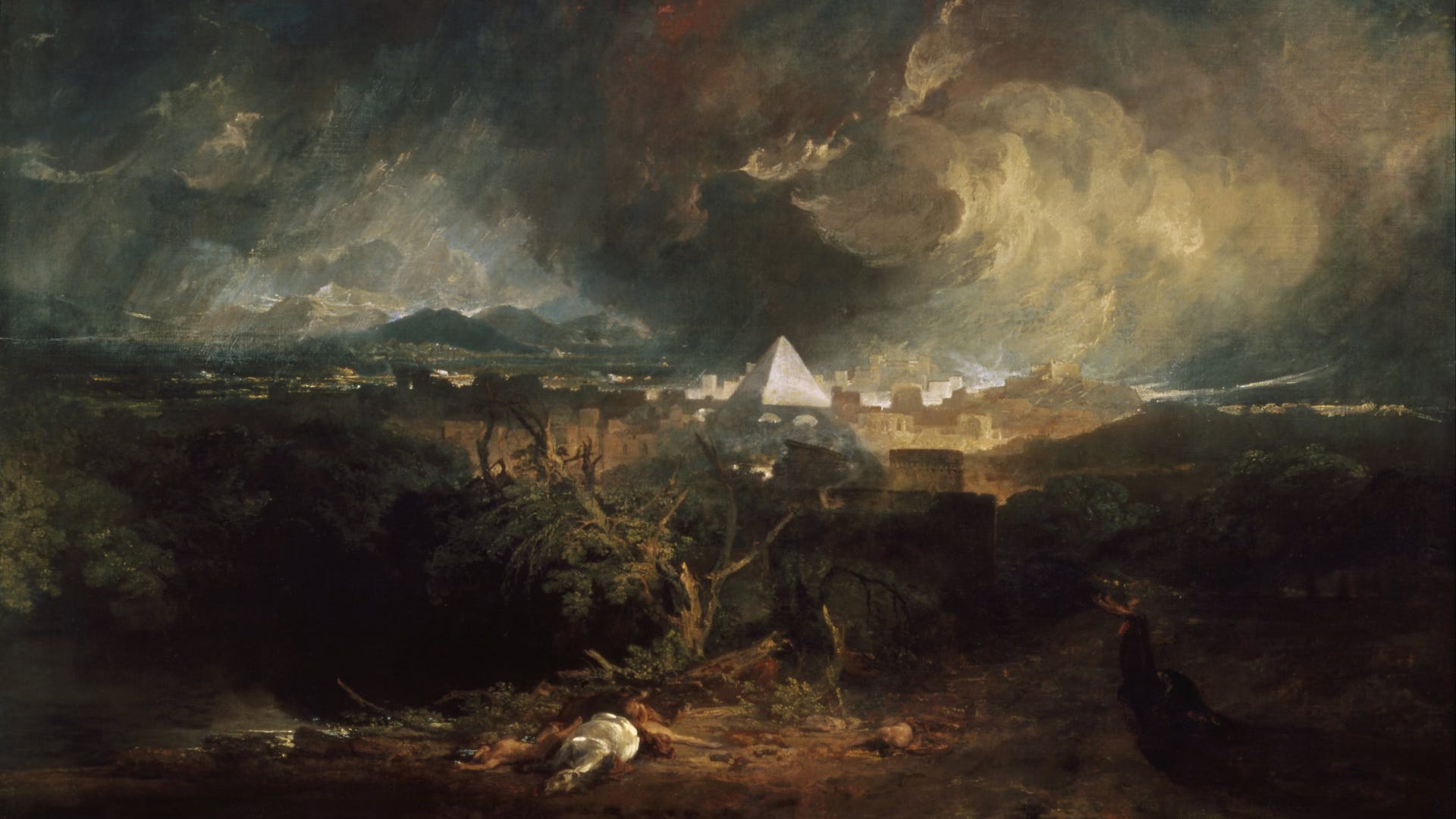
A point that must be made at the outset of examining the narrative of the plagues is that, for the most part, they were divine lessons meant both for Egypt and Israel. Although the Egyptians, in general, and Pharaoh, in particular, found themselves in the crosshairs of God’s “great acts of judgment,” the Israelites weren’t left out. They were beckoned to come to the same conclusion — namely, that there is no other God but Yahweh, who alone rules and reigns supreme. “In the plagues,” Arthur W. Pink notes, “the presence and power of Jehovah were demonstrated, so that He stood discovered to His people as the Living God.”1 That this lesson was necessary even among God’s people is evident from what the prophet Ezekiel tells us, as the Israelites, in their captivity, began embracing the detestable “idols of Egypt” as their own (Ezek. 20:7–8). Even so, God sovereignly decides to deliver them, of his own accord, for his own name’s sake (Ezek. 20:9–10, 44). Rather than dealing with them according to what they deserved, the Exodus was evidence that he was dealing with them in pure grace.
1. The Lesson Israel Missed
This is especially pertinent since, as the centuries wore on, Israel failed to learn the lesson of the plagues. What God did for them seemed to go right over their heads (Ps. 78:41–51; 105:27–36). Despite having a front row seat to God’s signs and marvels, it didn’t prevent them from rebelling, from turning away from their Deliverer, or from looking to a myriad other avenues for what only Yahweh could give them. They grew impatient and restless, conceding to the devil’s lie that what they need the most can be found apart from God himself. And before we look down our noses at the people of God of ancient writ, we are all too often guilty of the same thing. We’re seduced by the same concocted theories that tell us God won’t come through or that he doesn’t have our best interests in mind, leading us to all too quickly embrace the propaganda of the world that ushers us to believe that someone or something else can give us all the things that we so desperately crave.
When God doesn’t appear to be coming through for us, we’re prone to look at other possible sources for what we need. Much like Israel in Egypt, we start grabbing after idols, turning to whatever will offer us the most instantaneous relief. We look to our jobs to make us feel significant, to cheap comforts to make us feel safe, and to illusions of control to make us feel secure. We lean on our relationships, bank accounts, and phone screens for all the things that only God can offer. And the problem with all those other sources of so-called success, meaning, and purpose is that they’re hollow, sort of like the strainer in your kitchen cupboard (Jer. 2:13). In other words, the lessons of the plagues are just as trenchant now as they were then.
2. When Nile Met Its Maker
Even after witnessing the staff of Aaron turn into a snake and engulf the staffs of his magicians, Pharaoh remained unmoved (Exod. 7:13). His refusal to concede power and his outright dismissal of Yahweh’s authority led to the first of the ten plagues descending upon his domain (Exod. 7:14–24). While some commentators are apt to mention that the plagues increase in intensity as they go from one to ten,2 all that does is sell the first one short. After all, the Nile being turned to blood was nothing short of an ecological and theological disaster. Water, of course, is the most basic necessity to sustain life, but the Nile River basin held even greater significance to Egyptian life than we might ever fathom. It was the very heart of everything they did and dreamed of doing, providing water for drinking, irrigation, transportation, and trade, while also remaining deeply embedded in their religious beliefs.
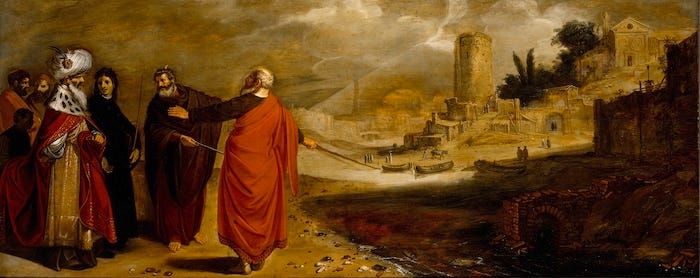

Just as their practical needs were sustained by the Nile, so, too, were their spiritual needs. The Egyptians revered the Nile River not just as a source of life but as the source of all life. In fact, two of the most important deities in the Egyptian pantheon — Osiris, god of the afterlife and resurrection, and Hapy, god of new life and abundance3 — are closely associated with the Nile and its annual flooding. As they made their way to the banks of the Nile, they saw both of these gods as sources of “living water,” sustaining everything their eyes could see and their hearts could long for. There’s even a myth about Osiris, who is said to have his bloodstream run along the Nile. Thus, the first plague sees God parodying this belief by turning their beloved river into an actual stream of blood. In so doing, he “struck at the heart of Egypt’s life,” J. Alec Motyer comments, “as the whole country and its people were dependent on and sustained by the river they considered to be divine, showing that there is a God greater even than the Nile, and it is his decision whether life on earth is sustainable or not.”4 The river of life was now a river of horrors, offering them only putrefaction and death (Exod. 7:21).
3. Behold, Your Creator and Sustainer
Accordingly, there is only one source of life and sustenance, and it comes from “the God of the Hebrews,” the great I Am. He is both Creator and Sustainer (Ps. 36:7–9). “In his hand is the life of every living thing,” Job confesses, “and the breath of all mankind” (Job 12:10). “He himself gives to all mankind life and breath and everything,” the apostle Paul would concur centuries later. “In him we live and move and have our being” (Acts 17:25, 28). Those things to which we often resort to give us “life” can only offer death. Indeed, the more we frequent those resources for our meaning, worth, and approval, only reveal how debilitating they are. Everything from our careers to our relationships to our finances to technology eventually cracks under the pressure of being our “source of life,” precisely because they were never meant to fill that void. Seventeenth-century French physicist and mathematician Blaise Pascal articulates this well:
There was once in man a true happiness, of which there now remains to him but the mark and the empty trace, which he vainly tries to fill from all that surrounds him, seeking from things absent the succour he finds not in things present; and these are all inadequate, because this infinite void [or soul] can only be filled by an infinite and immutable object, that is to say, only by God himself.5
The only infinite, immutable object that can sustain us is none other than the God who created us, the one who came to where we are to give us his life. Only the Creator of the soul can comfort and fill the soul to the brim. “I came,” Jesus later reveals, “that they may have life, and have it abundantly” (John 10:10). The gospel is the announcement that our God literally bleeds out so that we might live. This is the well that never runs dry. This is the river of Living Water that fills us up and quenches our thirst (John 4:13–14). Contrary to the world’s offering of phony ways to find hope, meaning, and purpose, Christ gives us those things by giving us himself.
4. The Frog Goddess and Pharaoh’s Embarrassing Plea
A week goes by before there is any relief from the curse of the bloody Nile (Exod. 7:25). Even still, Pharaoh stayed mostly unaffected by the whole ordeal (Exod. 7:22–23), which results in a second plague falling upon Egypt (Exod. 8:1–7). As you might expect, the swarms of frogs weren’t random. Frogs were sacred creatures in ancient Egypt, so much so that those who killed them, even accidentally, were liable to be punished by death. Heqet, the goddess of fertility and rebirth, was believed to be an amphibious-headed woman, revered as an emblem of vitality, especially in childbirth. According to Egyptian legend, it was Heqet who was there at the creation of the world, just as she is there at the dawn of all living things. Therefore, similar to the Nile being turned into a river of blood, God takes this sacred symbol of life and satisfaction and turns it into a nightmare.
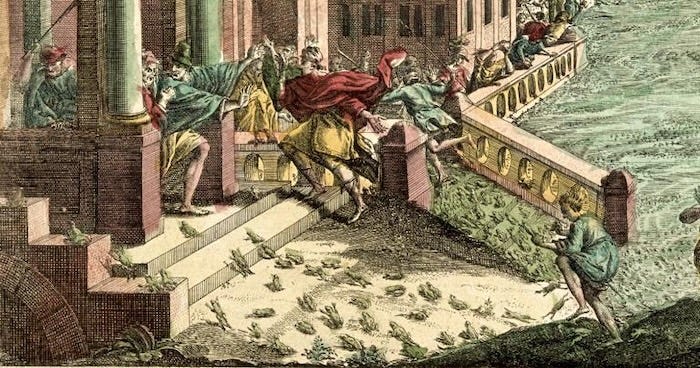

Hordes upon hordes of frogs leap out of the Nile riverbed and into their homes and bedrooms (Exod. 8:3–4). There was no escaping them. There were frogs when they went to bed, when they woke up, when they ate breakfast, when they made lunch, when they brushed their teeth, when they went to the bathroom, or when they sat on the sofa. They were everywhere! More than just a passing nuisance or a slight inconvenience, their daily lives were being thoroughly disrupted. After Pharaoh’s magicians weren’t able to make the frogs go away (only conjuring more, Exod. 8:7), Egypt’s king was left with one embarrassing option — namely to ask Moses to “plead with the Lord” for mercy on his behalf (Exod. 8:8).
Pharaoh knew the frogs had to go, making for what must’ve been a quite awkward audience with Moses. As they exchange words, Moses ironically inquires when the high and mighty Pharaoh would like the frogs to go away, a not-so-subtle jab at his supposed supremacy (Exod. 8:9–11). If one were truly desperate, a proper response would be to demand relief from the frogs right that very instant. However, by delaying relief, Pharaoh is still trying his best to insert himself into the equation. He still thinks he can control the situation; he’s still trying to have it his way by putting Yahweh on his timetable. The Lord, mercifully, takes him at his own game, answering Moses’s prayers and offering a respite from the frogs (Exod. 8:12–14). And yet, if you were left wondering if the king of Egypt had finally learned his lesson, the next verse makes it blatantly obvious that he hadn’t: “But when Pharaoh saw that there was a respite, he hardened his heart and would not listen to them, as the Lord had said” (Exod. 8:15).
5. Drowning in the God of More
Although we don’t worship frogs today, the spirit of Heqet is very much alive. We bow before other gods that seem to promise us success and satisfaction, convincing ourselves that convenience is our chief good and that life is at its best when we are pleased, affirmed, and comfortable. We worship the “god of more”: more money, more recognition, more friends, more things, more results, etc. — with the obvious problem being that the “god of more” always leaves you wanting. There’s never enough. There’s no end in sight to the craving for more; it goes on and on until we’re overrun. We get overwhelmed by our idols because we keep trying to find something eternally satisfying among a puddle of temporary trinkets. Thus, this plague is akin to God saying, “How’s that working out for you?”
This is God’s mercy, though. He lets us see the futility and stench of all those other sources of satisfaction so that we will eventually realize that nothing will ever be enough until he is. “You have made us for Yourself,” the venerable St. Augustine once said, “and our hearts are restless till they find their rest in Thee.” There’s only one source of enough-ness, of true and abiding satisfaction, and it’s found in the God who gives us his enough-ness through the gift of his Son. The Lord’s words to the woman at the well come to mind, since it’s only with him that we will “never be thirsty again” (John 4:14). This is the gospel’s abiding invitation to you, me, and everyone: “Come to me, and give you rest. I’ll be your enough.”
6. God’s Fingers Expose Frauds
When Pharaoh double-crosses Moses, another plague ensues, this time without any warning (Exod. 8:16–17). Unlike the first two, the deity associated with this plague is a little more vague, mainly because the Hebrew term for “gnats” can also be understood as “lice” or even “mosquitoes.” Nonetheless, many believe that this judgment was a direct affront to the Egyptian god Khepri, thought to possess transformational power, who was said to have the body of a man with the head of a beetle, specifically, a scarab. Scarab beetles are a type of dung beetle that roll tightly formed balls of animal dung in which the females lay their eggs. As scarab larvae emerge from spheres of excrement, Egyptians saw evidence of Khepri’s ability to harness life from the dust and the dung. Yahweh, of course, takes this myth and turns it into an agonizing reality, as the dust of the earth is turned into swarms of biting gnats and pesky insects. The material from which Khepri supposedly brought forth life was now the source of constant torment.
To make matters worse, Pharaoh’s sorcerers have finally met their match. “The magicians,” Moses tells us, “tried by their secret arts to produce gnats, but they could not. So there were gnats on man and beast. Then the magicians said to Pharaoh, ‘This is the finger of God’” (Exod. 8:18–19). Even though they can mimic staffs turning into serpents and water turning into blood, and can conjure frogs from the Nile, they can’t produce life, let alone transform it.6 Transformation is beyond their ability to replicate, forcing them to admit that they’re woefully outmatched. It’s striking that these masters of the occult finally acknowledge their limitations, leaving Pharaoh defeated and hardened.
7. The Lie of Self-Help Religion and the Love of the Savior
Similarly, we often resort to thinking that change and transformation are things that we can muster or manufacture on our own. We hear Paul’s words telling us to be “transformed by the renewing of our minds” (Rom. 12:1–2) and determine that this is a process that demands our ingenuity — that it’s simply a matter of implementing the right techniques. Transformation, then, becomes a matter just on the other side of finding the right methods or routines, which is another way of saying it is entirely up to you. You are Khepri. You are the one who can bring about the transformation and renewal you seek, and if you haven’t, that just means you haven’t found the right tactic yet. But if you believe that, you’re believing the same lie that Pharaoh believed. It’s the same lie at the heart of every self-help “gospel” that gets airtime today. The faith you want and the transformation you crave are available; you just have to work more, try harder, and do better to experience it.
However, the plague of gnats tells a very different story, as Egypt’s magicians reluctantly acknowledge what we are often too proud to admit — namely, that all of this is owed to “the finger of God.” True transformation isn’t something we can pull off. Having your heart and life conformed and transfigured into Jesus’s image isn’t a matter of our own intuition or willpower. Maybe there’s a besetting sin you’ve been trying to kick to the curb. So you establish some new routines, new habits, which are all well and good. It’s beneficial to be self-disciplined. But don’t think for a second that you are the one responsible for your transformation, especially since those routines and habits depend on your energy and effort. In other words, even your best efforts to change and transform yourself amount to little more than rearranging the dust.
The good news is that the God who formed life from the dust is the same God who breathes new life into dead hearts through the person and work of Jesus. This is what God in Christ comes to accomplish. He doesn’t offer self-improvement programs. He didn’t enter this world as a spiritual guru offering better techniques or better methods for spiritual fulfillment. Rather, he came to resurrect you. He came to die and rise again as the one who alone transforms sinners into new creations (2 Cor. 5:17). In Jesus, who is God’s power, love, and mercy enfleshed, we see the one who sustains our souls, satisfies our hearts, and transforms our lives, not by our effort, but by his grace.
Arthur W. Pink, Gleanings in Exodus (Chicago: Moody Press, 1962), 60. In his commentary on Exodus, J. Alec Motyer concurs: “The most obvious truth arising from the history of the plagues is of the immense, irresistible power of the Lord, its total command of every possible resource, and its total sway over the whole field of human life — place, person, and event.” The Message of Exodus: The Days of Our Pilgrimage, Revised Edition, The Bible Speaks Today (Downers Grove, IL: InterVarsity Press, 2021), 110–11.
“The punishment,” Allan M. Harman notes, “inherent in the individual plagues became more severe. The first three touched aspects of human comfort, the second three impinged on the maintenance of life, and the third group brought death.” Exodus: God’s Kingdom of Priests, Focus on the Bible Commentary Series (Ross-shire, England: Christian Focus, 2017), 107. This, to me, seems like a rigid over-simplification of the catastrophe each plague represented.
The British Museum has an amazingly helpful table overviewing the gods and goddesses of ancient Egypt, which, despite being tailored for younger readers, is quite comprehensive.
Motyer, 105.
Blaise Pascal, The Thoughts of Blaise Pascal, translated by C. Kegan Paul (London: Kegan, Paul, Trench, & Co., 1885), 95–96.
This quote from Arthur W. Pink is apt here: “The magicians were unable to remove the frogs, nor could they erect any barriers against their encroachments. All they could do was to bring forth more frogs. Thus it is with the Prince of this world. He is unable to exterminate the evil which he has brought into God’s fair creation, and he cannot check its progress. All he can do is to multiply wickedness.” Exodus, 65.
My pastor growing up once preached a sermon called “One More Night with the Frogs.” He dug in to why on earth Pharaoh would delay for a further day, and what it says about our own hearts, much as you have done here. It reminds me of Augustine’s famed words: “Lord, give me chastity and continence…but not yet.” Augustine too was reluctant to truly give everything over to God - to let him have full control.